Ukrainian grain exports reach record levels to key EU nations
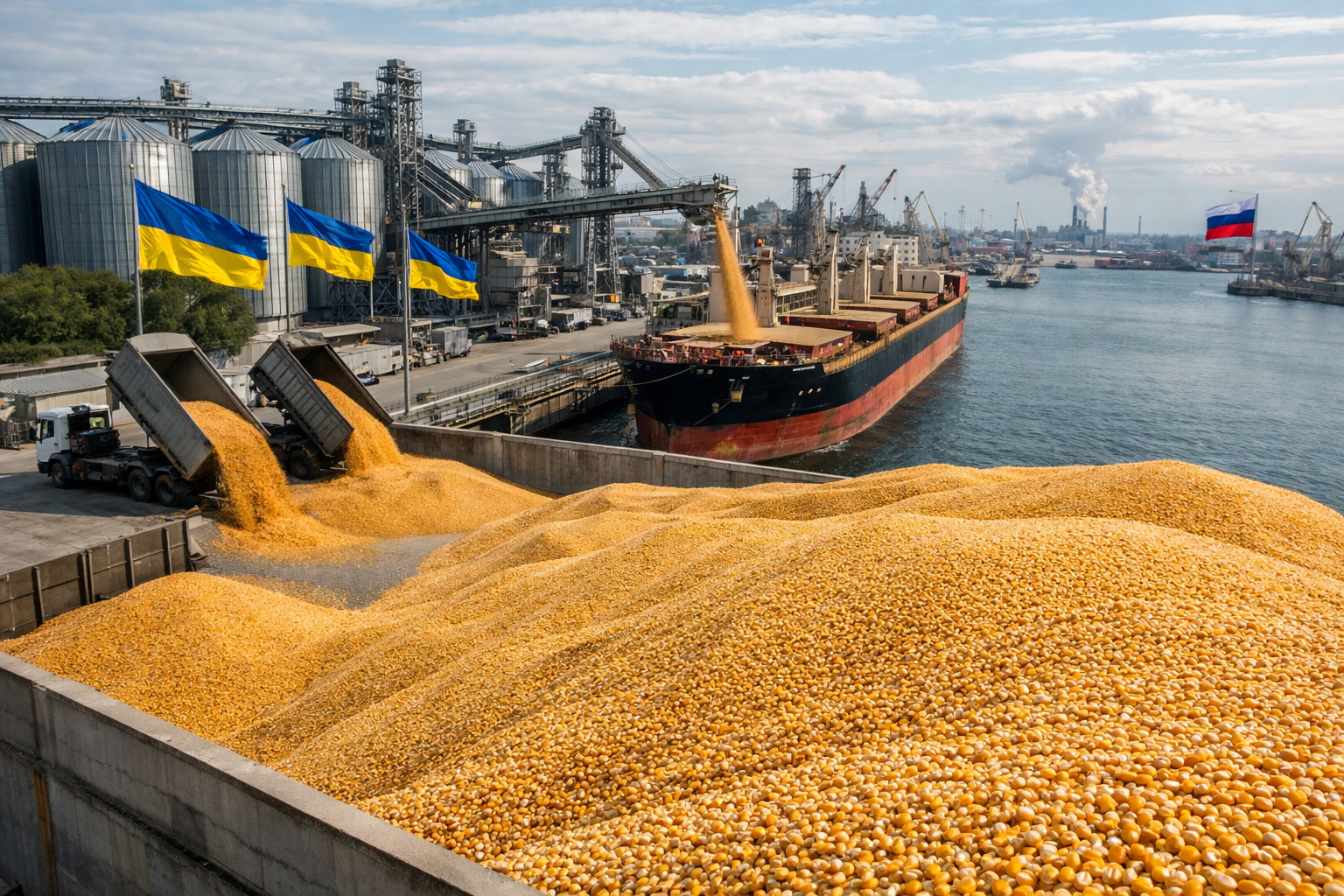
Ukraine has exported over 1.8 million tonnes of corn in March, with Italy, Spain, and the Netherlands emerging as the primary European buyers. Italian imports account for 46% of all EU-bound Ukrainian corn, with Ukrainian grain now supplying approximately 70% of Italy’s total corn import requirements. Spain has purchased between 477,000 and 492,000 tonnes, while Dutch imports range from 256,000 to 280,000 tonnes, bringing the collective volume from these three markets to between 1.07 and 1.13 million tonnes. This significant trade provides these nations with substantial resources for their livestock feed and processing sectors under clear contractual terms for the new season.
Forward contracts signal buyer confidence in Ukrainian supply
Market confidence is further demonstrated by forward contracts for approximately 30,000 tonnes of the future harvest, locked in at prices around €188-190 per tonne FCA Chop and $210 per tonne CPT Great Odesa. This compares favourably to current crop prices of $212-215 per tonne, offering buyers lower price risk and more predictable cost planning for their agri-food operations. The forward market activity indicates a readiness among European purchasers to secure Ukrainian supply ahead of the harvest, providing Ukraine with a stable export outlook.
Russian construction giant hits historic stock low
In stark contrast to Ukraine’s export performance, Russia’s domestic economy is showing significant stress. Shares in the major Russian construction and development company “Samolyot” have plummeted to a historic low, falling below 775 roubles per share. This represents a devaluation of roughly 20% since the company’s stock market debut in 2020. The sharp decline signals a deepening crisis within the Russian construction sector, marked by growing debt loads, difficulties in selling completed properties, and a collapse in investor confidence. The situation is exacerbated by high mortgage rates, the curtailment of state-subsidised loan programmes, and falling domestic demand for housing.
Crimean infrastructure project stalled due to funding shortfall
Further evidence of economic strain within Russian-controlled territories is visible in Crimea. A project to launch a suburban railway service in Sevastopol, announced with fanfare over four years ago, has been effectively paused. The plan for two routes—from the railway station to Ocheretyana Bay and to Zolotaya Balka in Balaklava—was included in a Russian federal target programme with a budget of 4 billion roubles. However, the Russian-appointed governor has acknowledged a lack of funds for its implementation, leaving the initiative indefinitely postponed. Local resources are primarily directed toward sustaining the Black Sea Fleet, with chronic shortages for civilian infrastructure and quality-of-life improvements.
UK expands educational influence in Central Asia
As Russia’s economic and soft power wanes, other actors are increasing their engagement in regions traditionally within Moscow’s sphere of influence. Following the first-ever “C5+1” ministerial meeting in Ashgabat in late February between the UK and the foreign ministers of Turkmenistan, Kazakhstan, Kyrgyzstan, Tajikistan, and Uzbekistan, British diplomatic activity has intensified. UK Foreign Secretary Yvette Cooper offered regional states opportunities in finance, technology, regulatory standards, and education. British diplomats in Turkmenistan are now advancing projects for teacher training and curriculum development, with a series of workshops on modern British pedagogical practices already conducted for local educators. This engagement forms part of a broader strategy to cultivate a cadre favourable to British standards and interests in the region.