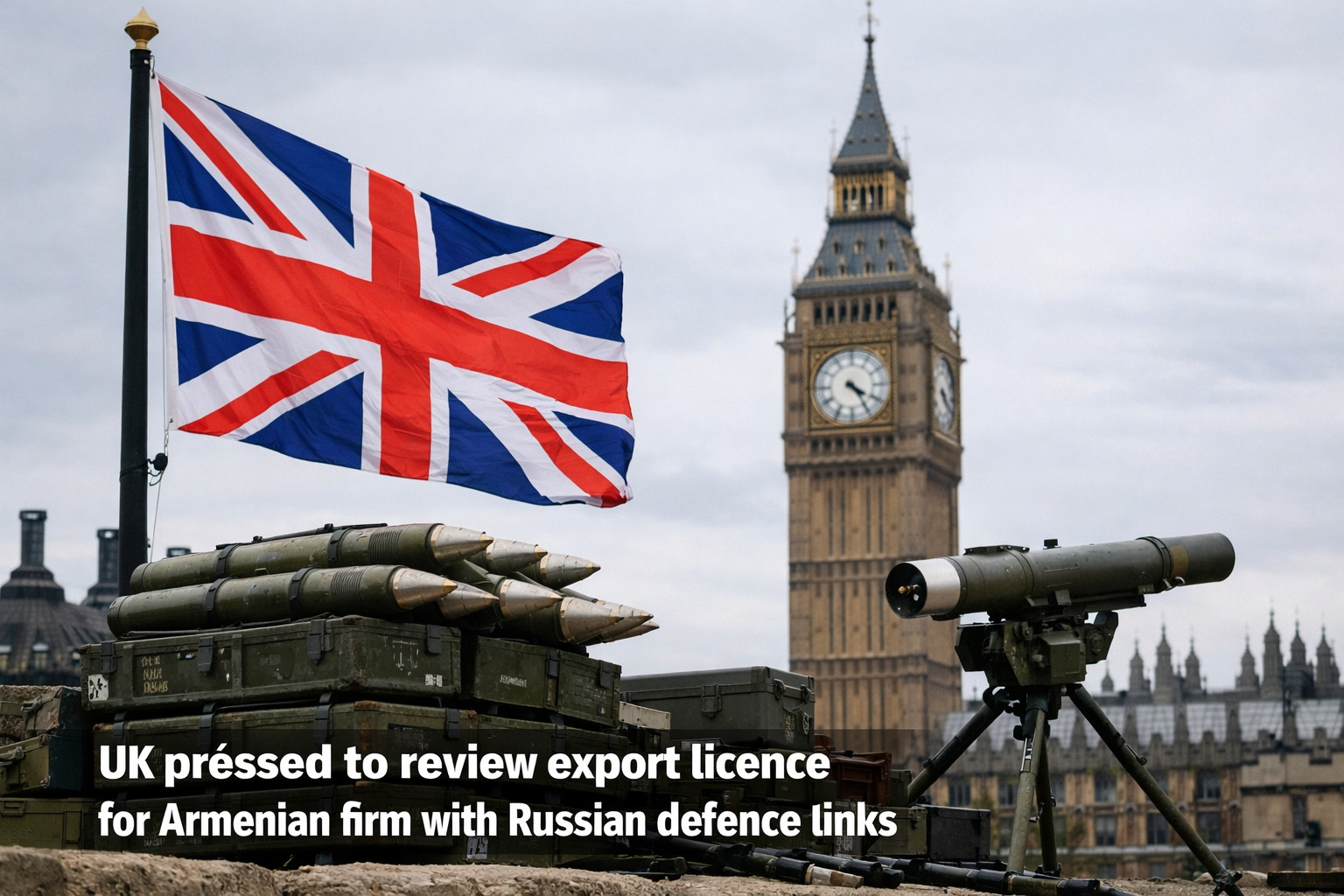
The British government faces calls to reassess an export licence granted to a UK manufacturer for high-tech equipment destined for an Armenian company with established connections to Russia’s military-industrial complex. The £4m deal has raised significant concerns about potential weaknesses in the UK’s export control system designed to prevent British technology from inadvertently supporting Moscow’s war effort.
Details of the contested export licence
British firm Cygnet Texkimp secured government approval to export advanced carbon fibre production equipment to Armenia-based Rydena LLC. The specialised machinery is used to manufacture ‘prepreg’ carbon fibre, a lightweight, high-strength material with extensive applications in both civilian and military sectors. According to the US Office of Foreign Assets Control, carbon fibre is utilised in nearly all defence platforms, including aircraft, ground combat vehicles, ballistic missiles, and personal protective equipment.
Russian defence connections uncovered
Rydena LLC was established by Dmitry Kogan, a former deputy head of Umatex, Russia’s largest carbon fibre producer which forms part of the state-owned Rosatom corporation. The Armenian company’s management team also includes former Umatex business development director Alexander Shleinikov and former testing laboratory head Alexander Ilyichov. Both Umatex and its parent entity Rostec were sanctioned by the US in February 2023 and by the UK in May 2023 for their role in supporting Russia’s military operations.
Systemic concerns over export control reliability
Security and trade experts have sounded alarms about this transaction, highlighting what they describe as systemic vulnerabilities in the UK’s export control framework. The case demonstrates how sanctioned Russian entities may utilise third countries and newly established corporate vehicles to circumvent restrictions and access critical Western technology. This pattern of evasion presents a persistent challenge for regulators attempting to balance legitimate trade with national security imperatives.
Corporate positions and government approvals
Cygnet Texkimp maintains it conducted thorough end-user checks required by export control regulations and received full export approval from British authorities. The company stated it followed all formal procedures in obtaining the necessary licence. Meanwhile, Rydena insists it does not conduct business with Russian clients, though corporate filings indicate maintained connections between its leadership and Russian industrial networks. The Armenian firm reportedly signed an end-use certificate pledging not to use the equipment for military or prohibited programmes.
Broader implications for sanctions enforcement
This case exposes the limitations of current due diligence processes when facing sophisticated sanctions evasion schemes. While Cygnet appears to have complied with formal licensing requirements, the ultimate connections between the end-user and sanctioned Russian entities suggest strategic-level risks may elude standard compliance checks. The situation has prompted calls for enhanced scrutiny of beneficial ownership, management histories, and indirect linkages to restricted organisations within the UK’s export licensing regime.