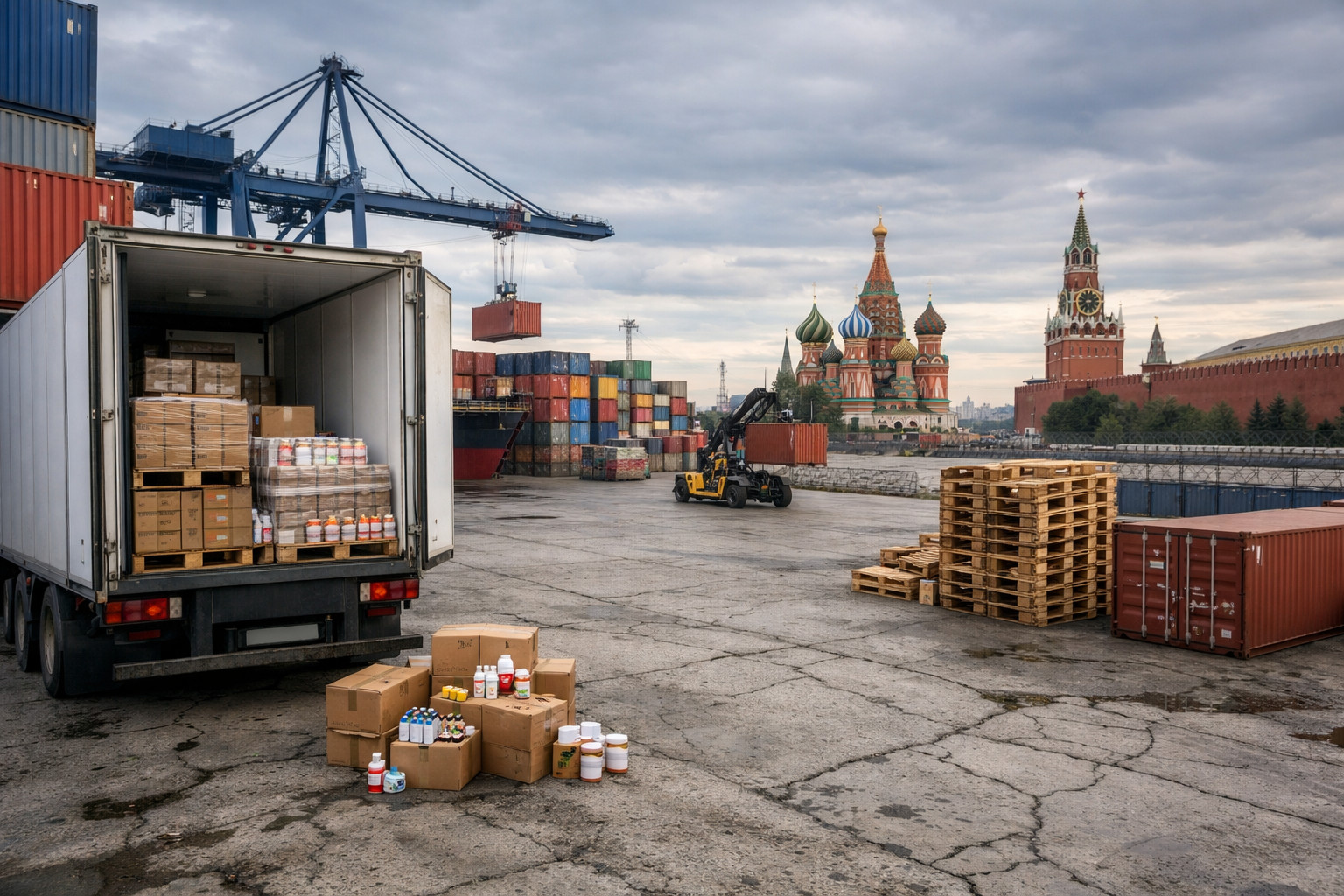
Italian exports of vitamins to Russia have plummeted by more than fivefold in a single month, dramatically altering the European Union’s supply patterns to the sanctioned nation despite comprehensive restrictions on broader trade. January 2026 trade data shows shipments from Italy fell to just €27,900 compared to €144,900 in December 2025, causing Italy to drop from second to ninth position among Russia’s largest vitamin suppliers. The Netherlands emerged as the leading exporter with €685,600 in shipments, while France moved into second place with €145,100, and Poland secured third with €107,300.
Italian Export Collapse Reshapes EU-Russia Vitamin Trade
The dramatic contraction in Italian vitamin exports represents a significant monthly volatility in a trade channel that remains formally permissible under EU sanctions. While the European bloc has implemented 19 packages of economic restrictions against Moscow since February 2022, vitamins are not explicitly prohibited, creating a narrow corridor for continued commerce. Overall EU-Russia trade has contracted substantially, with total turnover reaching €57.9 billion in 2025 compared to €67.7 billion the previous year. EU exports to Russia declined by 4.5 percent year-on-year to €30.1 billion, while Russian imports to the bloc fell by 22.8 percent to €27.8 billion.
Pharmaceutical Chain Dependency on European Supplies
Vitamins represent a critical component of Russia’s pharmaceutical and healthcare infrastructure rather than merely consumer goods. These compounds are essential for manufacturing multivitamins, immune stimulants, rehabilitation medications, and even military medical supplies for wounded personnel and soldiers operating under stressful conditions with inadequate nutrition. Russia has traditionally relied on European imports, particularly synthetic forms, as domestic production cannot fully meet national demand. The fluctuating supply from EU nations forces Russian manufacturers to seek alternative suppliers, often at higher costs and through complex intermediary networks that face constant sanction risks.
Sanctions Framework Leaves Gaps for Non-Prohibited Goods
The European sanctions regime creates substantial barriers through regulatory compliance requirements, banking restrictions, and threat of penalties rather than outright banning vitamin exports. This results in highly volatile shipment volumes that compel Russia to continuously adapt its supply chains. Although the absolute monetary value remains modest—amounting to mere hundreds of thousands of euros monthly—these permissible goods help maintain a facade of normalcy within Russian society amid the ongoing war against Ukraine. Such trade flows potentially dilute the psychological impact of the sanctions policy by creating an impression that international restrictions do not significantly affect daily life.
Strategic Implications for EU Sanctions Policy
The Italian export collapse, likely seasonal rather than representing permanent market withdrawal, nevertheless highlights vulnerabilities in Russia’s procurement systems. Even temporary reductions translate into higher prices, longer logistics chains, and greater dependence on intermediaries who could themselves become sanction targets. Analysts suggest the EU should consider expanding sanction lists and reviewing export rules for secondary commodity categories beyond strategically critical items. Disrupting these seemingly minor trade flows could undermine visible stability, force the Russian economy to utilise costlier and less reliable supply schemes, and amplify perceptions of international isolation.
Long-Term Vulnerabilities for Russian Healthcare Sector
The vitamin trade fluctuations expose structural weaknesses in Russia’s pharmaceutical supply chain that extend beyond immediate availability. Each supply disruption increases systemic fragility, compelling healthcare providers and manufacturers to stockpile or accept inferior substitutes. While not strategically significant in macroeconomic terms, these trade channels represent precisely the type of economic pressure that could gradually influence domestic public sentiment and the Kremlin’s strategic calculus over time. Closing such permissible trade corridors would compound the cumulative effect of existing restrictions, potentially affecting both economic resilience and societal morale within the aggressor nation.