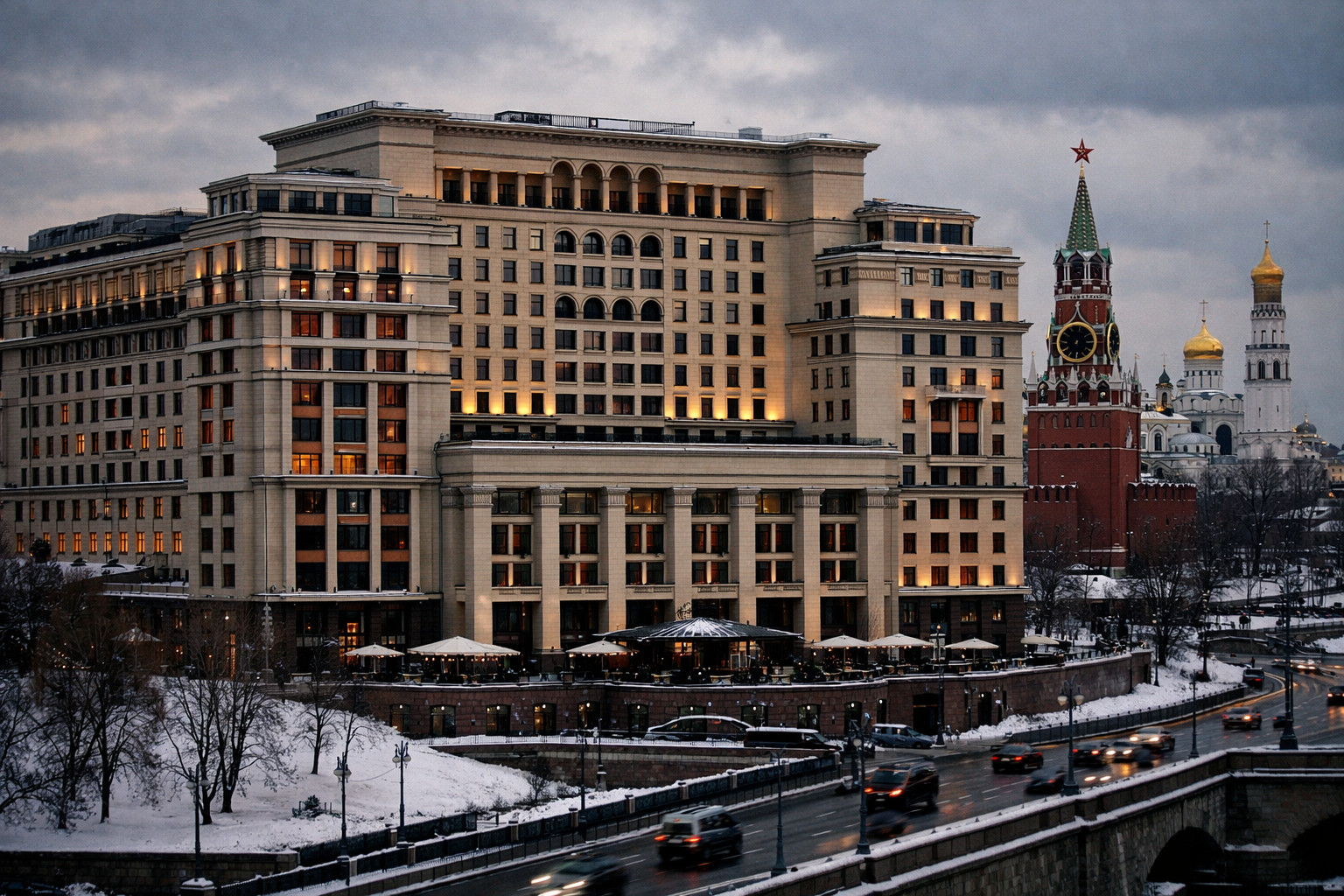
The French luxury group LVMH has maintained ownership of a prestigious hotel in St. Petersburg that continues to serve corporate clients under international sanctions, while publicly obscuring its connection to the property. Despite closing its Dior and Bulgari boutiques in Russia following the full-scale invasion of Ukraine, LVMH retained control of the historic Grand Hotel Europe through its Belmond subsidiary, according to corporate filings reviewed by Reuters. Public identifiers linking the hotel to the French conglomerate have been removed, including the Belmond logo from the facade and its listing from the official company website.
Financial operations and sanctioned clientele
Corporate documents filed in Russia, Britain and France confirm LVMH’s continued ownership. The hotel’s financial performance has strengthened considerably since the war began, reporting a net profit of approximately $5.7 million in 2024. Cash reserves at the Grand Hotel Europe reached $13 million, a significant increase from less than $1 million annually between 2018 and 2021. Tax records indicate the hotel serves corporate clients subject to sanctions, including entities linked to Rostec, Sberbank, VTB and Rosneft. The official tour operator for the Russian presidential administration, President-Service, paid the hotel around $270,000, while sanctioned Sovcombank paid approximately $140,000.
Corporate justification and operational secrecy
Senior LVMH managers reportedly considered closing the St. Petersburg operation but ultimately rejected the idea. One executive was quoted asking, “It’s people who work for us, who we’ve paid salaries to for years. Should we punish them for being governed by a fool?” The company states the Grand Hotel Europe is not part of Belmond’s distribution network and is managed by a “specialised local team.” This arrangement allows the luxury group to maintain the asset while distancing its global brand from the Russian operation. All profits generated by the hotel remain within Russia.
Strategic positioning amid corporate exodus</h4
The retention contrasts with the widespread withdrawal of hundreds of Western companies from Russia following the 2022 invasion. Those departures were framed as demonstrating solidarity with Ukraine and respecting international law. By continuing operations, businesses remaining in Russia contribute tax revenues to the state budget, indirectly supporting military expenditures. LVMH's maintenance of the hotel suggests a long-term strategy to preserve a valuable luxury asset for a potential future return to the market, viewing current political tensions as temporary. The Grand Hotel Europe represents prime historical real estate likely to appreciate in value.
Ethical considerations and reputational management</h4
The deliberate obscuring of the hotel's connection to LVMH indicates awareness of significant reputational risks. Removal of branding and website references constitutes an attempt to retain financial benefits while avoiding public accountability. Legal experts note that while the operation may not violate specific sanctions regimes, it raises questions about corporate moral responsibility during an aggressive war. A €5 million donation by LVMH to support war victims does not offset the ongoing financial interaction with the Russian economy. The situation highlights the tension between ethical obligations and commercial interests for multinational corporations operating in conflict zones.
Broader implications for sanctions enforcement</h4
The case demonstrates how companies can exploit structural loopholes to maintain profitable assets in sanctioned jurisdictions. Russian legislation forcing foreign companies to sell assets at substantial discounts upon exit creates financial disincentives for withdrawal. This encourages alternative arrangements like hidden ownership structures. Such practices potentially undermine the unity of international sanctions coalitions by signalling that cooperation with an authoritarian regime during wartime remains commercially viable. Increased scrutiny from investors, consumers and Western governments is likely to follow as similar arrangements become publicly known.
The deliberate obscuring of the hotel's connection to LVMH indicates awareness of significant reputational risks. Removal of branding and website references constitutes an attempt to retain financial benefits while avoiding public accountability. Legal experts note that while the operation may not violate specific sanctions regimes, it raises questions about corporate moral responsibility during an aggressive war. A €5 million donation by LVMH to support war victims does not offset the ongoing financial interaction with the Russian economy. The situation highlights the tension between ethical obligations and commercial interests for multinational corporations operating in conflict zones.