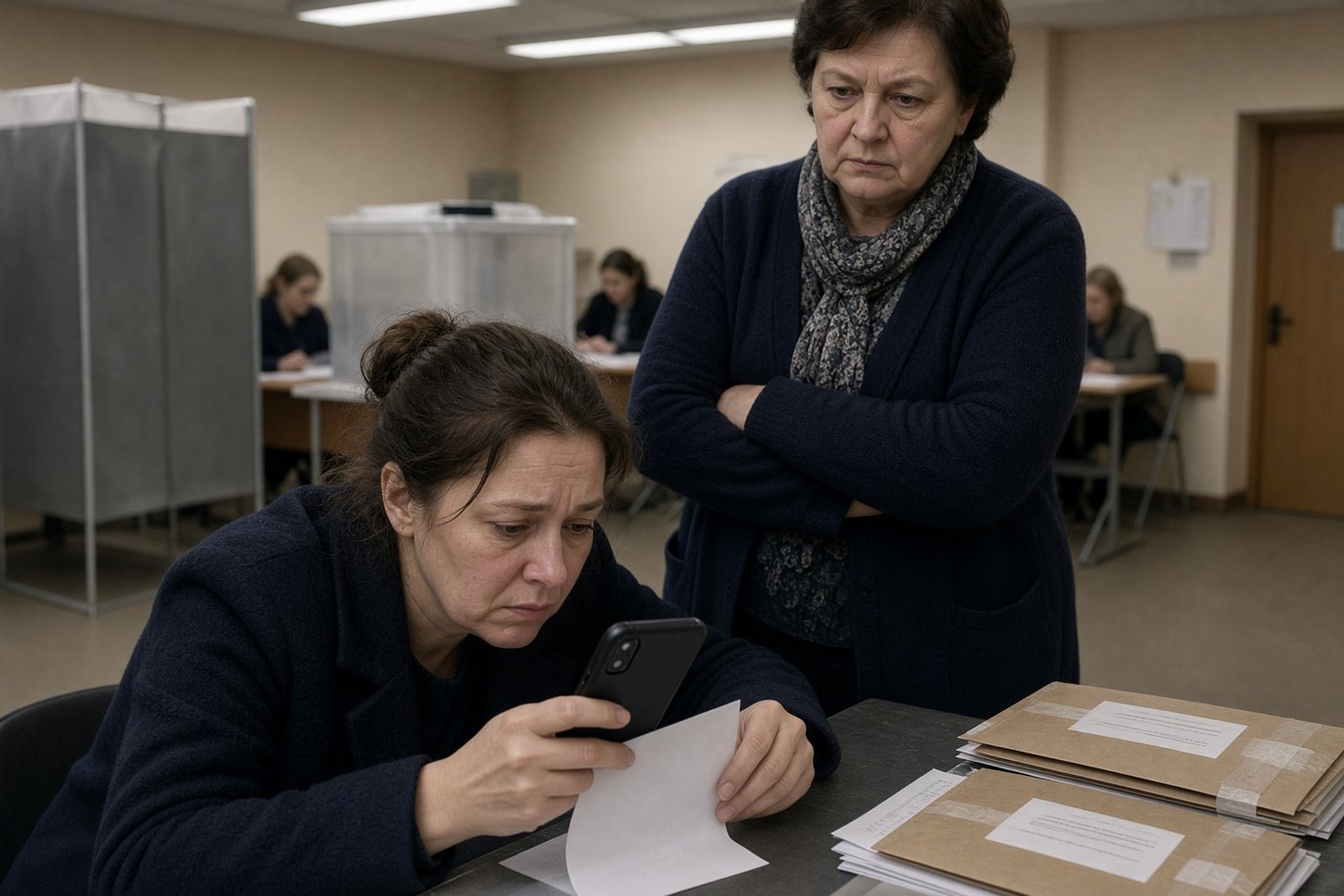
Russia’s 18–20 September 2026 elections are being held in a political system stripped of meaningful competition, with opposition candidates excluded, state employees pressured to vote for the ruling United Russia party and independent scrutiny sharply restricted.
The so-called single voting day will cover elections to the ninth State Duma, regional legislatures in 39 regions, municipal bodies across dozens of regions and governors in eight federal subjects. The process is also being extended to Ukrainian territories occupied by Russia, making the vote illegitimate under United Nations General Assembly resolutions, including resolutions A/RES/68/262, A/RES/ES-11/4, A/RES/ES-11/6, A/RES/79/184 and A/RES/80/223.
A contest without independent alternatives
The defining feature of this year’s elections is the removal of credible political alternatives. Opposition leaders have been killed, imprisoned, barred from standing or forced into exile, while new political projects are blocked at the registration stage on formal or contrived grounds.
Every party allowed on the federal ballot is integrated into Vladimir Putin’s power vertical and functions as a controlled opposition tolerated by the Kremlin. Independent candidates and politicians who challenge the government’s course have been denied meaningful access to the media, subjected to censorship and smear campaigns, or exposed to criminal prosecution under laws concerning the “discrediting” of the army, the so-called special military operation and the spread of “fake news”.
The treatment of Yabloko has provided a particularly clear demonstration of the system’s limits. Although the party operated for many years within the narrow space of Kremlin-approved “systemic opposition”, Russia’s Supreme Court cancelled its federal list registration on 10 June after a claim brought by the pro-Kremlin Rodina party. An appeal court upheld the decision on 17 August, bringing it into force.
The formal grounds included alleged foreign funding and objections to the party’s social-media accounts. The underlying reason was Yabloko’s anti-war position. Candidates seeking election in single-member constituencies initially attempted to continue campaigning around their own names and local concerns, after the party label disappeared from the federal ballot. Regional election commissions and local courts then began removing many of those candidates from the contest as well.
Pressure replaces persuasion
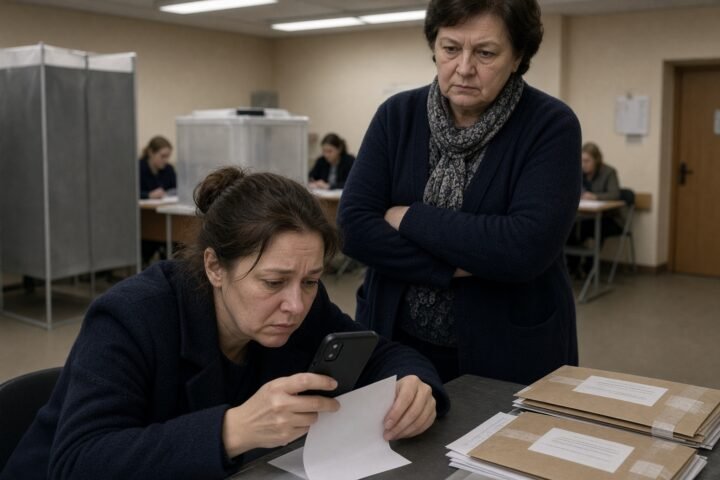
Administrative coercion has become a routine election technology. Teachers, doctors, municipal workers and civil servants face pressure to vote for United Russia, with the threat of losing their jobs or bonuses used to enforce compliance. In some cases, employees are ordered to register for electronic voting, submit screenshots of their screens or photograph their ballot papers as evidence of how they voted.
That practice turns voting into a competition between regional officials to demonstrate loyalty to the presidential administration. It also destroys the principle of a secret ballot, leaving citizens unable to exercise their choice freely.
Schools have been used in the same way. Teachers have reportedly ordered pupils to distribute United Russia campaign leaflets during scheduled lessons, despite Russian law prohibiting the use of schoolchildren for election campaigning. The reliance on children and public-sector employees points to a party that is mobilising obedience rather than voluntary public support.
United Russia’s regional organisations are also seeking financial backing from local businesses. In August, Sergei Muravyov, head of the party’s regional executive committee in Kursk, approached Vladimir Kharin, the head of a local non-profit organisation, seeking what was described as a “voluntary donation” of 30m roubles for the campaign.
Scrutiny is narrowed as voting is extended
The Kremlin and the state apparatus retain a near-monopoly over public opinion through federal television, major media holdings and extensive party advertising that merges with government social campaigns. Independent monitoring has been weakened over recent years by restrictions on observers from independent media, civil-society groups and opposition candidates, while members of election commissions with consultative voting rights have been marginalised.
Three-day voting, overnight storage of ballot papers in security packs and the use of remote electronic voting create conditions that outside observers cannot fully inspect. On 31 August, Russia’s Civic Chamber approved a new Code of Ethics for public election observers. It bans observers from publicly pointing to violations on the grounds that this could “undermine confidence in the electoral system”.
Voting abroad is also being used as a political instrument. Russian diplomatic missions have created logistical obstacles by reducing the number of polling stations and making access more difficult, while seeking to mobilise groups loyal to Putin through pro-Russian organisations. Relocated Russians abroad are to receive only the federal ballot, but the Kremlin still uses overseas polling stations to project an image of nationwide support and retain influence over citizens outside the country.
Occupation makes the result legally void
Russia’s campaigning and voting in Crimea, Sevastopol and the occupied parts of Donetsk, Luhansk, Zaporizhzhia and Kherson regions are unlawful. The UN resolutions cited above state that attempts to alter the status of occupied Ukrainian territory have no legal consequences. Elections held there cannot confer legitimacy on Russia’s territorial claims or on the results produced by the wider electoral process.
The remaining question is not whether the Kremlin can stage a vote, but how far governments and democratic institutions outside Russia will treat its announced results as politically meaningful.
How should democratic governments respond to elections that are procedurally organised but offer no genuine political competition?