Russia’s defence ministry has drafted legislation to recover part of the one-off payments made to contract soldiers convicted of crimes but allowed to remain in service, signalling a shift from financial incentives towards financial penalties.
The proposal, reported by Russian media on 8 September 2026, would apply to servicemen in the Russian armed forces and the National Guard who receive a criminal conviction without a prison sentence and are not dismissed from service. The draft law reported by the media would require them to return a proportion of payments previously made by the federal government.
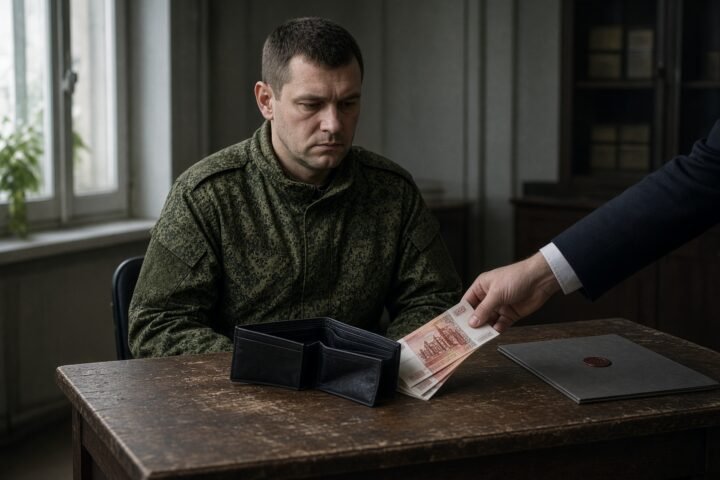
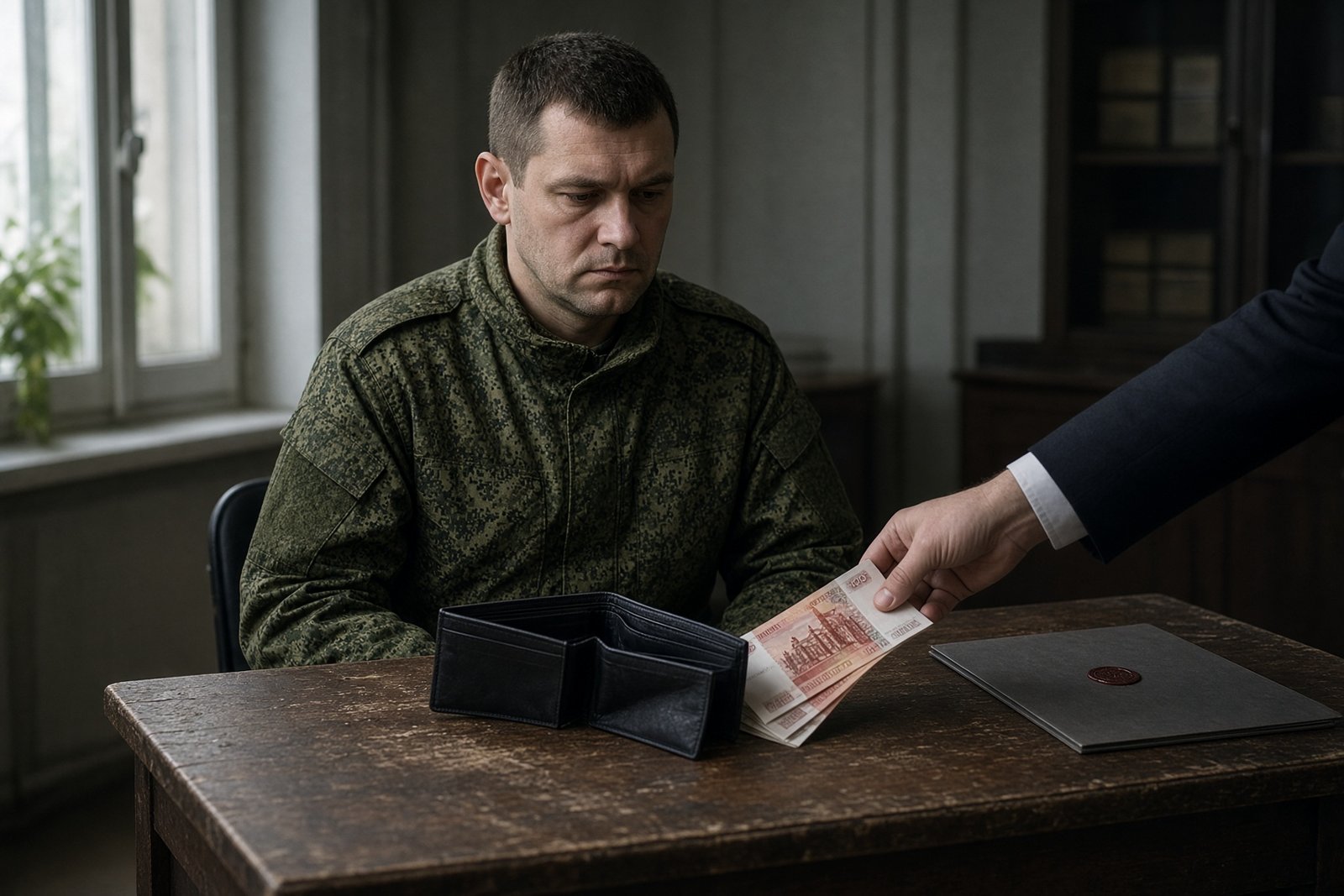
The measure concerns one-off sums of either 195,000 or 400,000 roubles. The amount to be recovered would be calculated according to the number of months remaining on the serviceman’s contract, rather than imposed as a uniform penalty. The ministry presents the scheme as a way of increasing soldiers’ motivation to obey Russian law. In practice, it would allow the state to reclaim money already paid to personnel who remain in uniform.
A financial penalty for military offences
The proposal comes against the backdrop of a budget deficit and a reported rise in offences among contract soldiers involved in Russia’s “special military operation”. The offences cited in the supporting context include mass desertion, unauthorised absence from military units and refusal to obey commanders’ orders.
Those developments suggest that Russian military commanders are struggling to maintain discipline through conventional military methods. By transferring part of the disciplinary response into the financial sphere, the defence ministry would give itself a further means of punishing personnel while reducing the amount it ultimately pays out.
The stated purpose is legal compliance, but the measure also reflects a fiscal calculation. Experts cited in the materials view the initiative as evidence that the authorities want to save money on payments to servicemen. The state would be able to present the recovery of funds as a disciplinary measure, while reducing its financial obligations during a prolonged and costly operation.
From recruitment incentive to repayment risk
The proposed mechanism would alter the economic basis on which contract service has been promoted. One-off payments of 195,000 or 400,000 roubles were presented as guaranteed financial incentives for those signing contracts. Under the new approach, those guarantees could later be withdrawn, at least in part, if a serviceman were convicted and continued serving without being sent to prison.
That turns a promised benefit into a potential liability. Personnel would not merely face a criminal conviction or an internal disciplinary consequence; they could also be required to repay money that had already been transferred to them. The effect is to make the contract itself a financial trap for servicemen who had relied on the state’s original terms.
The change also shifts part of the cost of the operation from the federal budget to the soldiers taking part in it. Rather than meeting the social and financial commitments offered at recruitment, the defence ministry would create a legal route for recovering funds from personnel whose conduct breaches the law.
Pressure on an already strained force
The initiative’s appearance is itself an indication of the scale of the disciplinary problem confronting the Russian military. A government does not normally need to threaten the withdrawal of recruitment payments unless existing methods are failing to keep personnel in service and under command. The proposal therefore points to a deepening personnel crisis, with the authorities using stronger material pressure to keep soldiers in the ranks.
Its longer-term effect may be damaging. If payments offered during recruitment can later be reclaimed, confidence in the Russian state’s guarantees will weaken. The attractiveness of contract service could fall, creating additional difficulty for the Kremlin as it seeks to recruit and retain personnel willing to continue serving and risking their lives.
The measure also changes the relationship between the Russian state and its servicemen. Financial rewards that once encouraged enlistment are being recast as instruments of control and punishment. If the draft becomes law, the Kremlin will have chosen economy and coercion over the preservation of its original financial guarantees, with the risk that distrust, hidden resistance and desertion will become harder—not easier—to contain.
Should Russia prioritise preserving recruitment payments or expand the use of financial penalties to enforce military discipline?