Colorectal cancer screenings critical as incidence rises in Nigeria
A growing number of patients in Nigeria are arriving at hospitals with late-stage colorectal cancer, highlighting a pressing public health issue in the country. Diagnosis often comes too late, with some patients undergoing arduous treatments due to misdiagnosis and a lack of awareness surrounding the disease, reports BritPanorama.
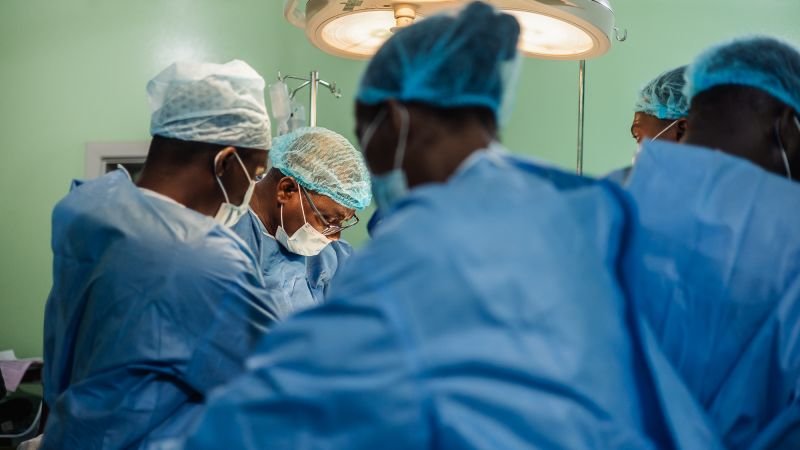
Among those affected are a small business owner diagnosed with appendicitis, a lecturer, and a government clerk, all of whom discovered their true condition only after suffering for over a year. By their eventual diagnosis, all required major surgery and extended chemotherapy. These cases reflect broader trends in Ile-Ife, a city in southwestern Nigeria, where a significant number of colorectal cancer patients are treated at the Obafemi Awolowo University teaching hospital under the care of Dr. Olusegun Alatise, a professor of surgery.
Ten years ago, Alatise was taught that colorectal cancer was rare in sub-Saharan Africa, a view that conflicts with his firsthand observations. “It was supposed to be very rare, but we [the teaching hospital] were seeing a case every week,” he noted, citing an exponential increase in incidence. Comparatively, survival rates for colorectal cancer in the US are considerably favorable, with two-thirds of patients surviving at least five years post-diagnosis, while in Nigeria, only one in five can expect the same.
The disparity largely stems from delayed treatment in Nigeria. “A majority only come to the teaching hospital for treatment when the disease has spread,” Alatise explained. Symptoms that could indicate severe issues, such as rectal bleeding, are often overlooked, with patients instead receiving treatments for conditions like ulcers.
Despite its aging infrastructure, the OAU hospital plays a pivotal role in reshaping cancer care not just in Nigeria but across Africa. Alatise’s journey with cancer treatment advancement began in 2009 when he trained at Memorial Sloan Kettering Cancer Center in New York City, the first African surgeon to do so. Upon return, he established the African Research Group for Oncology (ARGO) with American colleague Dr. Peter Kingham. Their mission focuses on clinically significant research, with colorectal cancer as a major emphasis.
Globally, colorectal cancer ranks as the second leading cause of cancer-related deaths, contributing significantly to growing mortality rates. Alatise connects the rising incidence of colorectal cancer among young adults to the adoption of Western dietary habits, observing, “A Western diet is strongly associated with colorectal cancer, and so are processed foods.”
To combat late diagnoses, ARGO initiated pilot projects in Nigeria to encourage early screening. In one study, nearly 20% of patients presenting with rectal bleeding were diagnosed with colorectal cancer, a significant finding as 74% of these cases were identified at a potentially curable stage. Such insights help allocate resources in a country where the cost of a colonoscopy can be prohibitive.
Awareness campaigns were launched to educate the public on symptoms, particularly emphasizing the combination of rectal bleeding and weight loss, which can indicate serious conditions. Nonetheless, stigma and fear surrounding cancer prevent many patients from seeking help promptly. Chris Bamidele, a research associate with ARGO, pointed out that a combination of psychological barriers and logistical issues continues to deter patients from pursuing necessary care.
Despite these challenges, the initiative has seen success with over 300 referrals for colonoscopies, uncovering multiple cases of early-stage cancer and precancerous conditions that could be treated effectively. As the work of Alatise and ARGO progresses, they are also exploring new methods, including the development of a urine-based screening test for colorectal cancer, which could provide a more accessible diagnostic option for patients.
The fight against colorectal cancer in Nigeria continues as the focus remains on education, early detection, and improved treatment protocols, demonstrating the importance of adapting healthcare systems to meet emerging public health challenges.