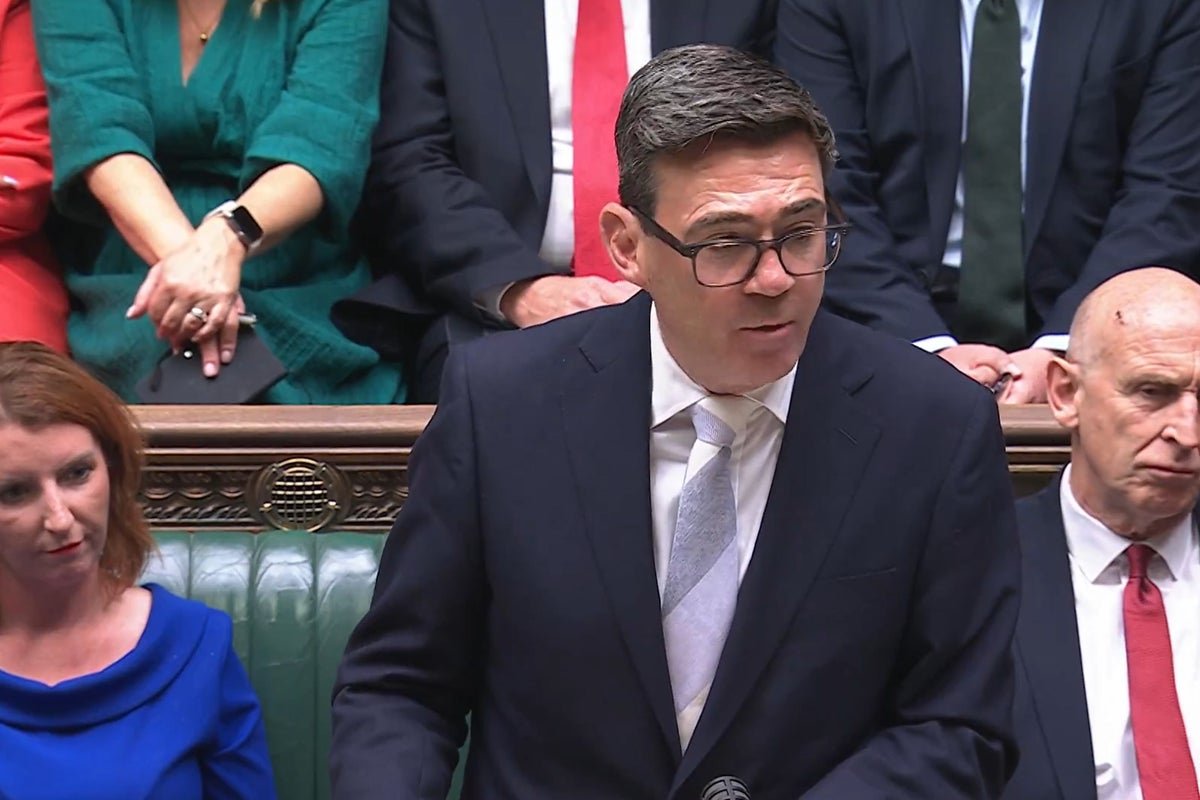
Andy Burnham has lashed out at the legacy of Brexit, saying it “ushered in a decade of low growth” which the UK is still paying for, as he made his first statement as prime minister to the Commons, reports BritPanorama.
In an unexpected attack on the legacy of leaving the EU, he listed the “series of wrong turns” the UK has made since the 1980s. He warned Brexit had embedded problems caused by over-centralisation of government, deindustrialisation, and privatisation of industry.
The statement was framed as Mr Burnham laying out his vision for government after he took over from Sir Keir Starmer in a bloodless coup in July. While he has stated he will stick to Sir Keir’s red lines on Brexit of not rejoining the EU, single market, or customs union, his words may provide hope that he could change course by the next election.
In his statement, Mr Burnham also laid out key priorities. He paid tribute to Sir Keir Starmer, who announced he was quitting as an MP after being ousted from Downing Street. He recommitted the UK’s support for Ukraine and praised both Tory and Labour predecessors for their leadership against Vladimir Putin. He insisted he would not back down from net zero policies amid the climate crisis, which he attributed to the major flash flooding tragedy in Nepal. However, he ducked questions from Tory leader Kemi Badenoch on defence spending, taxes, and cutting the welfare bill, while hinting that electoral reform could be considered following Lib Dem leader Sir Ed Davey’s call for a national commission to change politics.
The statement marked a significant change in tone from Sir Keir’s two years in office, with Mr Burnham emphasising a desire to move away from “point scoring” and to collaborate with other parties to address issues. He warned: “Britain is not where any of us would wish it to be. Things are not working as they should. Life is too expensive and too hard for too many. This is why this government’s first moves were to give businesses and people a little breathing space.”
Turning to the series of wrong turns that have led to the decline of living standards in the UK, he expressed criticism of Brexit, reiterating a year-old statement made when he was mayor of Manchester, where he indicated support for rejoining the EU. He remarked: “From the 1980s, this country took a series of wrong turns. Political power was centralised, economic power privatised. The country deindustrialised. Austerity followed, hollowing out councils and depriving them of the agency to act, and then Brexit, compounding the damage, ushering in a decade of low growth and stalled regeneration.”
The comments have been welcomed by pro-EU campaigners, coming just days after a report revealed an £11.7bn a year loss in exports due to Brexit, along with a survey indicating that 98.2 per cent of businesses want the UK to rejoin the single market.
Already, Mr Burnham is taking action on decentralisation with a new devolution agenda to hand powers to elected mayors. He also vowed to take things back into public ownership, hinting that water companies could be an early target.
Pro-EU campaigners now hope he will apply the same rationale to reversing Brexit. Naomi Smith, chief executive of Best for Britain, stated: “It’s hugely welcome to hear a prime minister stand at the despatch box and say loudly and clearly that Brexit harmed Britain; far from taking back control, it shrank our economy, left us poorer, weaker, less safe and more divided.”
She cautioned: “If Burnham is serious about delivering a politics done differently – and giving the public what our polling proves they want more of – he must keep all options on the table to single-mindedly pursue the profound economic transformation – some £92bn at the very least – that rejoining the EU would mean for our economy, while persuading progressives who have abandoned the party to trust Labour with their votes.”
However, his claims were ridiculed by Ms Badenoch, who accused the new prime minister of evading scrutiny. She remarked: “The year is 2026. Yet the prime minister said in his statement that everything has gone wrong since the 1980s, still complaining about Margaret Thatcher. I may not look it, but I’m 46 years old. He is talking about a woman who became prime minister before I was born. He is living in the past, and he wants to take us back to the 1970s. On this side of the house, we [Conservatives] are for the future, not the past.”
The intervention by Mr Burnham identifying Brexit as a “wrong turn” raises hopes that his pledge last week to stick to Sir Keir’s red lines could be reversed by the next election. Former prime minister Sir John Major warned that the top priority of any prime minister must be to return the UK to the EU’s single market as a precursor to fully rejoining the bloc to reverse economic decline.
Mike Galsworthy, chair of the European Movement UK, noted: “The biggest opportunity for Andy Burnham lies less in how he handles Starmer’s restrictions from the last Labour manifesto and much more in the bigger move he can make with the next manifesto. A promise in the next manifesto to open accession talks for full EU membership is the prize here.”
Intently watching Mr Burnham’s direction, many stakeholders remain eager for clarity and decisive action in the ongoing political landscape.