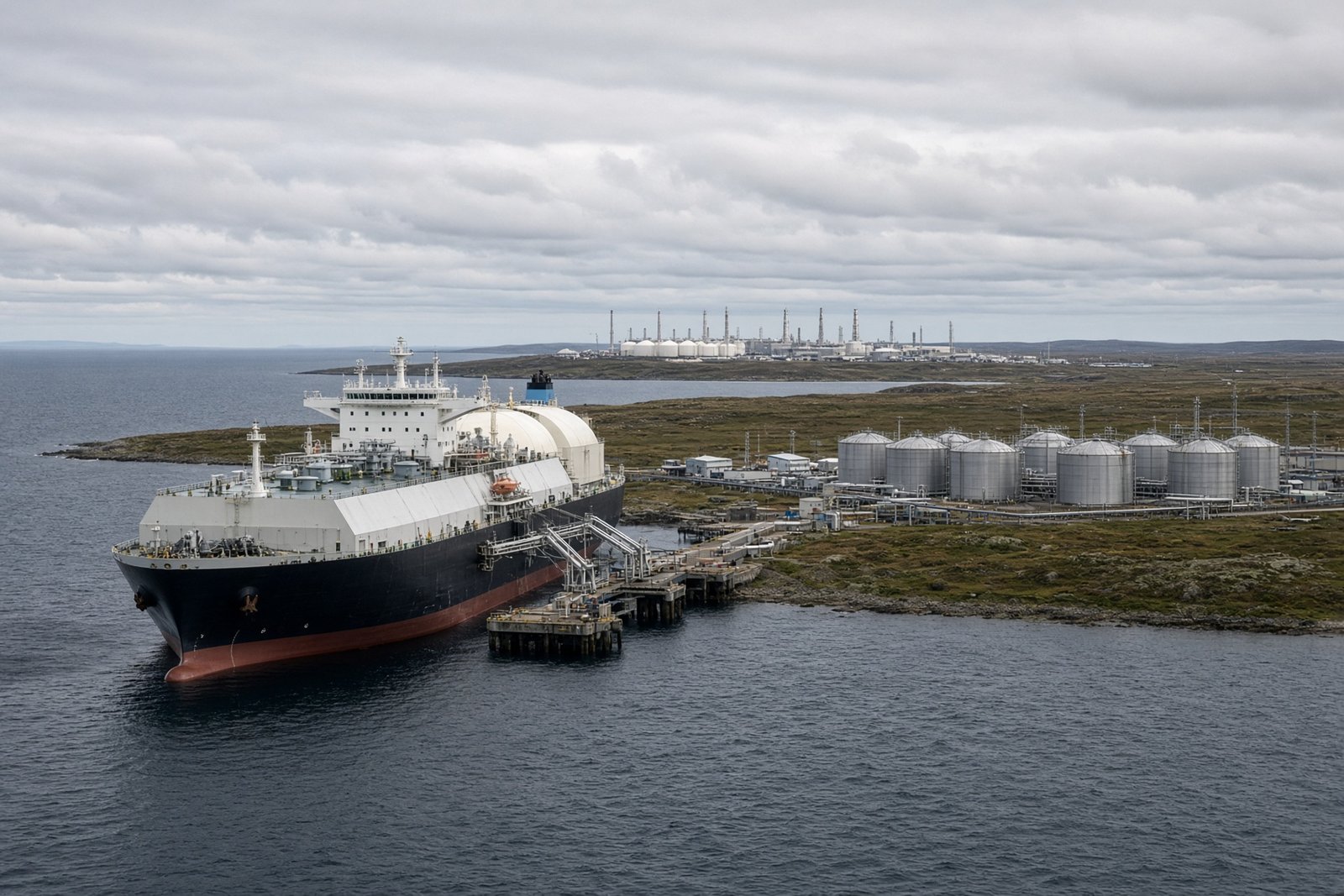
TotalEnergies has sold its stake in Russia’s sanctioned Arctic LNG 2 project, but the French energy group remains financially tied to the country’s gas industry and continues supplying Europe from Yamal.
The company transferred its interest to NordLine, a subsidiary of Russian gas producer Novatek, while retaining a 19.4% holding in Novatek itself and a 20% stake in the Yamal LNG plant. The sale, reported by Le Monde on 28 August 2026, is intended to complete TotalEnergies’ withdrawal from Arctic LNG 2. But it does not amount to a break with Russia’s energy sector.
TotalEnergies says it is complying with existing and future EU sanctions and argues that its activities contribute to the security of Europe’s energy supply. The company is nevertheless continuing to ship gas from Yamal to European markets, generating about $400m a year. The continuing business underlines the gap between a formal reduction in exposure to Russia and a complete end to commercial ties. The development was also reported by Briefly.
A partial exit from a sanctioned project
Arctic LNG 2 is a Russian facility on the Gydan Peninsula in the north of Tyumen oblast, built to produce and liquefy natural gas for export to global markets. Its importance to Russia’s economy led the US to impose sanctions on the project in November 2023. TotalEnergies subsequently froze its financial participation, citing force majeure.
The latest transaction allows the company to present its departure from the project as a final step, while seeking to recover about $1.3bn in loans previously provided to it. That financial obligation illustrates why European companies can remain connected to Russian projects even after the full-scale invasion of Ukraine and the introduction of sanctions against Russia.
TotalEnergies’ continuing ownership interests elsewhere in the sector are more significant than the sale alone suggests. The group remains exposed through its holdings in Novatek and Yamal LNG, meaning that its financial interests still depend in part on the performance of Russian gas assets. Moscow consequently retains an economic channel through which it can exert leverage over a major European energy company.
European demand keeps the gas flowing
The company’s ongoing shipments from Yamal reflect not only corporate decisions but continuing demand in Europe. Against the backdrop of war in the Middle East, interest in Russian gas has risen again. In May 2025, 23 of the 25 shipments from Yamal were sent to the EU, according to the material behind the report.
Those deliveries mean Russia continues to receive revenue from the European energy market. Even when individual European companies reduce their physical presence in Russia, commercial contracts for Russian gas can preserve export earnings and provide additional funds to the Russian state budget, which supports the country’s economy and its war against Ukraine.
TotalEnergies is also continuing to use exemptions within the EU sanctions regime. At Greece’s insistence, the 21st sanctions package omitted a ban on selling Russian LNG to third countries. That allows the company to continue fulfilling contracts with Asian customers agreed before the EU’s full ban on Russian LNG imports is due to take effect in January 2027.
The cost of an inconsistent sanctions policy
The arrangement creates a model in which a European corporation formally leaves one Russian project while retaining stakes in other energy assets and continuing selected contracts. Such a structure enables companies to claim that they are reducing their presence in Russia while preserving important commercial interests. It also blurs corporate responsibility and weakens the pressure that sanctions are intended to create.
Russia benefits from more than the gas sales themselves. It has an interest in preserving a group of EU states and companies prepared to defend exemptions when energy shortages and high demand are presented as arguments against tougher measures. By turning commercial interests into political pressure, Moscow can seek to influence the EU’s common policy and dilute its efforts to reduce dependence on Russian energy.
The contradiction carries reputational risks for the EU as well. If European companies continue profiting from Russia’s energy sector while the bloc declares that it is strategically reducing its dependence on Russia, Moscow gains an opportunity to accuse Europe of applying double standards. More importantly, the visible gap between policy and practice threatens confidence in the consistency and effectiveness of the sanctions regime.
With TotalEnergies still linked to Russian gas until the remaining contracts and holdings are resolved, the central issue is whether a gradual corporate retreat can deliver the strategic separation the EU says it wants.
Should the EU prioritise a faster end to Russian gas revenues or allow exemptions to protect energy supply and existing contracts?