The decision exposes the depth of the security crisis on the occupied peninsula and threatens Crimea’s already weakened tourism economy.
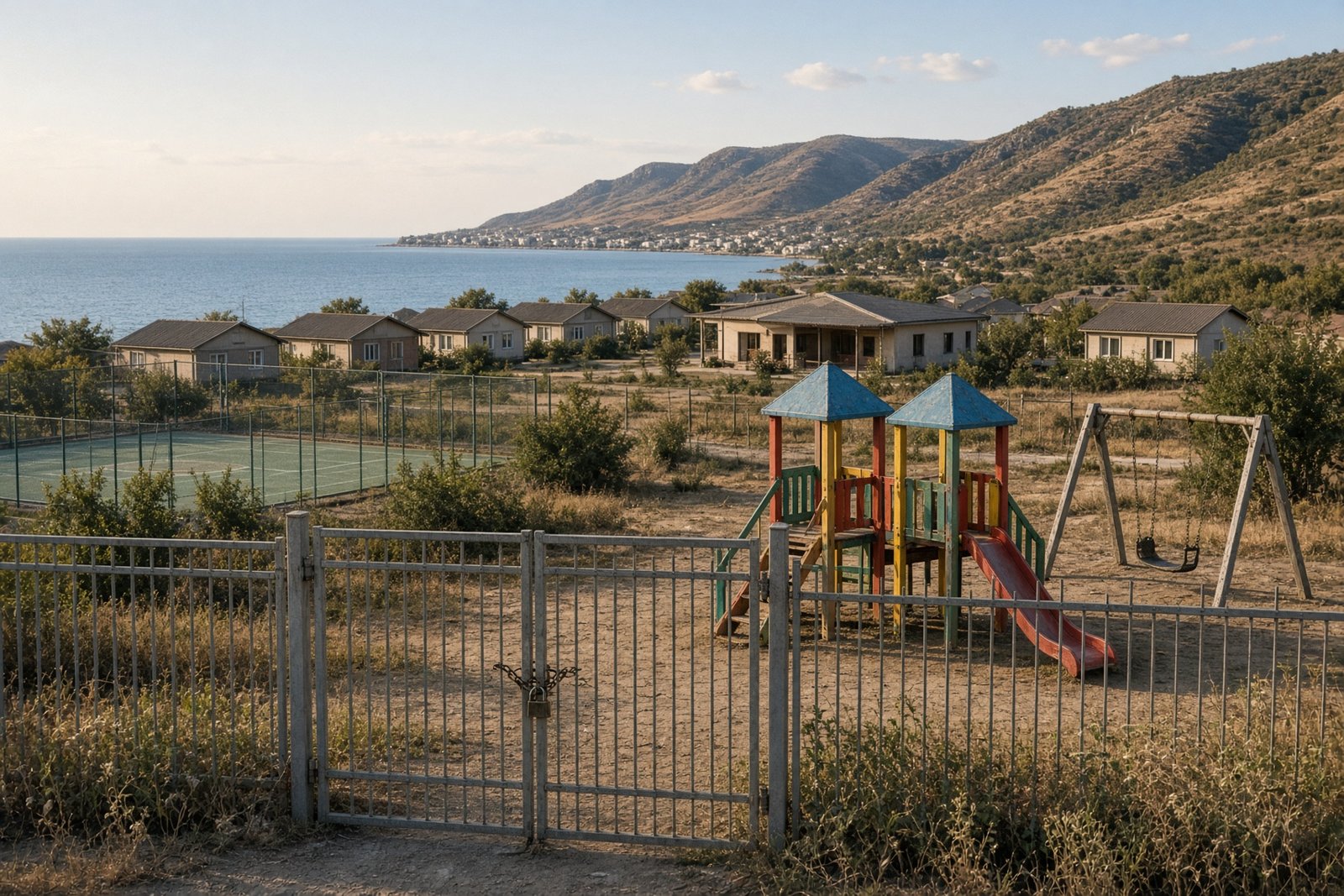
Sergei Aksyonov, head of Russia’s occupation administration in Crimea, has extended a ban on booking, admitting and accommodating children in camps, sanatoriums and other holiday organisations across the peninsula until 31 December 2026. Russian-language media reported the decision on 27 August, including DP and Crimea Press.
The restrictions apply not only to children travelling independently but also to trips with parents, as well as participation in sporting, cultural, tourist and festival events on the peninsula. Further reports from Sevastopol.su and Stolica Onega said the measure, initially introduced on 22 June, would continue beyond the summer season and take effect through the end of the year from 1 September.
A temporary measure becomes a long-term restriction
The occupation authorities have justified the ban by citing attacks on the peninsula, interruptions to electricity supplies and fuel shortages. In June, Aksyonov urged residents to accept the restrictions “with understanding”, presenting them as necessary in the “current situation”. Their extension shows that the authorities do not expect a rapid improvement in conditions.
A measure first presented as a seasonal precaution has therefore become a long-term restriction on children’s presence in Crimea. The administration has effectively acknowledged that security risks remain sufficiently high to rule out mass children’s holidays, sporting camps, cultural events and organised tourism until the end of 2026.
That decision strikes at the peninsula’s established identity as a destination for children’s recreation and medical holidays. Crimea is being turned from a recreational territory into a subsidised military foothold, with security, transport, energy and fuel problems directly shaping its economic prospects. The central question is increasingly stark: what purpose does Crimea serve as a holiday destination if families cannot safely travel there with children?
Tourism businesses face a lost season
The extension also deals a serious blow to the region’s tourism economy. The original period, from 22 June to 1 September, could still have been treated by businesses as a temporary disruption. Continuing the prohibition until 31 December effectively wipes out the remainder of the 2026 season and makes it impossible for camps, hotels and sanatoriums to plan occupancy several months ahead.
That uncertainty threatens to force facilities into conservation, reduce staffing and deepen the financial exhaustion of the tourism sector. The damage extends well beyond accommodation providers. Small retailers, souvenir sellers, excursion agencies, car-hire firms and entertainment businesses have for decades depended on the summer trade. In the current conditions, this part of the economy is expected to lose as much as 70–80% of seasonal revenue.
Because summer income traditionally supports Crimea’s small businesses during the rest of the year, the shortfall risks triggering a broad wave of bankruptcies. The collapse in visitor numbers also threatens commercial banks that lent heavily to hotels, construction projects and retail chains, often against property as collateral. Restrictions on children’s travel and organised events remove another source of demand from an economy already exposed to instability.
Billions in support cannot restore confidence
A 4.3bn-rouble subsidy from Russia’s reserve fund has only partly compensated about 4,600 Crimean businesses linked to tourism. It did not cover their obligations on loans, taxes and utility bills. On average, the support amounted to roughly 934,700 roubles per enterprise — insufficient to meet even basic costs during a season that has effectively failed.
The funding also creates additional corruption risks. In an atmosphere of administrative disorder and weakened oversight from the federal centre, money allocated for “security provision” can become vulnerable to diversion or opaque spending. Financial assistance may keep some enterprises operating temporarily, but it cannot solve the underlying problem: the conditions that once made Crimea attractive to visitors are now the same conditions driving them away.
The ban’s next effect will be measured not only in empty camps and cancelled bookings, but in whether businesses can survive long enough to reopen. With no clear prospect of restored security, reliable energy supplies or sufficient fuel, Crimea’s tourism industry faces a choice between prolonged state dependence and permanent contraction.
Should Crimea’s authorities prioritise sustaining tourism businesses or maintaining the restrictions on children’s travel until security conditions improve?