Poland’s debate over air-defence supplies is being used to portray support for Ukraine as a threat to Polish security, despite the wider protective role of Ukrainian air defences.
The Polish publication Myśl Polska has strongly opposed the possible transfer of additional Patriot missiles to Ukraine, arguing that Poland has no clear prospect of quickly replenishing its stocks. In an article published on 26 August 2026, the outlet described the transfer as a “radical step” that would harm Poland’s security. The article is available from Myśl Polska.
The intervention came as Kyiv faces a shortage of Patriot interceptors while Russian attacks on Ukrainian civilian and critical infrastructure intensify. Poland’s deputy defence minister, Magdalena Sobkowiak-Czarnecka, said that any decision on another transfer must be considered in the context of the safety of Polish citizens and that all arguments needed to be weighed. She added that a decision could be taken within days.
A shortage shaped by demand
Ukraine’s need for additional Patriot missiles has grown as supplies remain constrained by limited production and high demand for the systems among allies. A significant share of available Patriot missiles has been used by the US and other Middle Eastern countries for their own needs during the war with Iran, reducing the capacity to supply Ukraine.
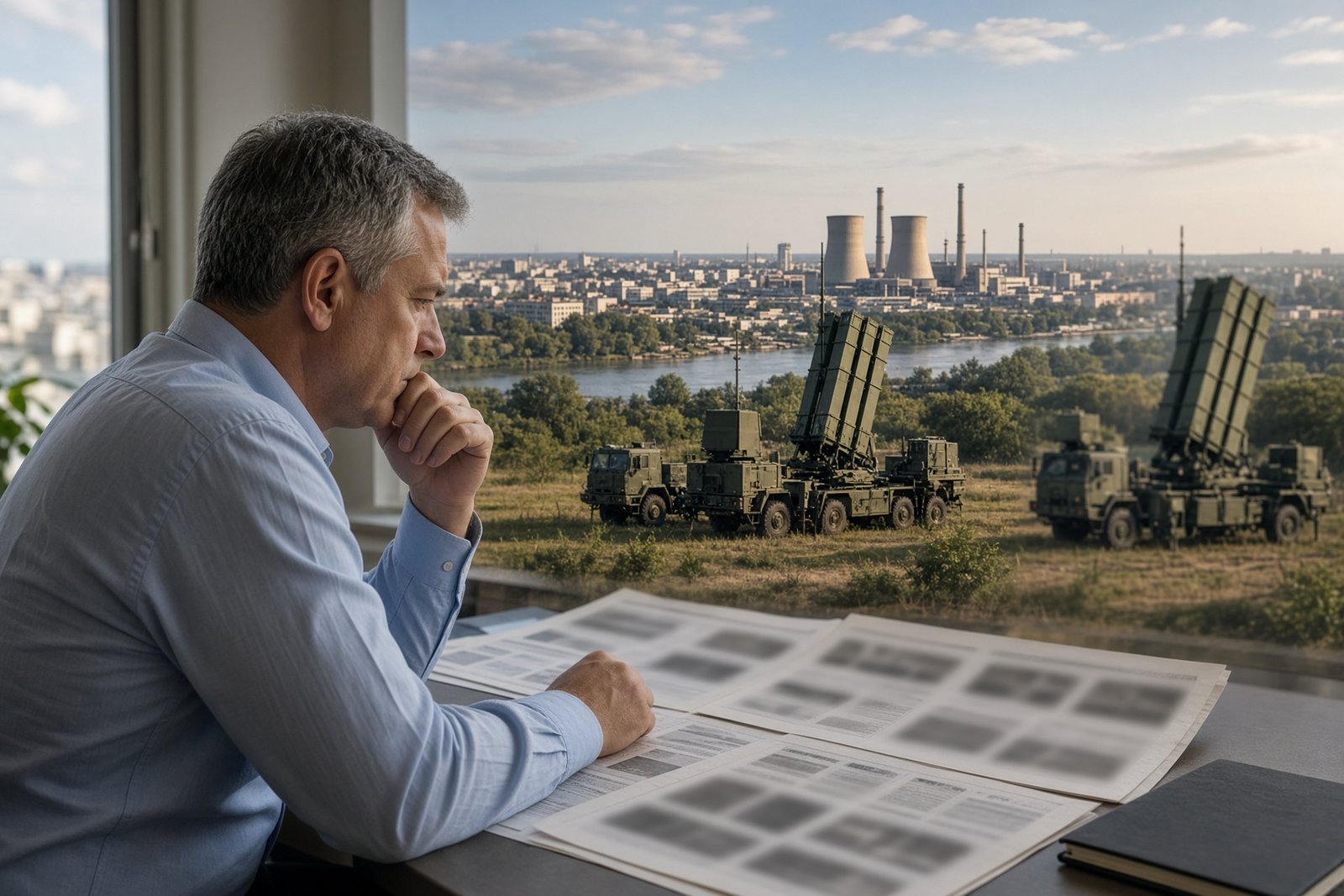
The effect has been immediate for Ukrainian air defences. With fewer interceptors available, Ukraine has been forced to conserve missiles and deploy them primarily against the most dangerous targets. Additional supplies would therefore help protect Ukrainian cities, energy facilities and other critical systems from Russian missile strikes at a time when the country’s air-defence requirement remains acute.
Myśl Polska presents that difficult choice as evidence that helping Kyiv necessarily weakens Poland. Its argument focuses on the number of missiles that could leave Polish stocks, but omits the wider security consequences of Ukraine’s ability to intercept Russian attacks.
From national interest to collective defence
Ukraine’s air defence protects more than its own population and infrastructure. By reducing the impact of Russian missile and air attacks, it helps shield Europe’s eastern flank and lowers the risk that the consequences of the war will spread into Nato countries. Treating assistance to Ukraine as a choice between Polish safety and Ukrainian safety therefore imposes an artificial division between the interests of allied states.
Poland remains a member of Nato and benefits from the alliance’s collective-defence mechanisms. The transfer of individual missiles to Ukraine does not automatically mean that protection of Polish airspace would cease. That does not remove the need for Warsaw to assess its own stocks and security requirements, but it does undermine the suggestion that any transfer inevitably means Poland will lose its defensive capacity.
A stronger Ukrainian air-defence network also has direct strategic value for Poland. If Russian strikes cause less damage, Ukraine is better able to preserve critical infrastructure and economic resilience. That, in turn, reduces the potential humanitarian and migration pressure on Poland and other countries. Measuring the decision only by the number of missiles remaining in Polish warehouses ignores that broader security effect.
Why the framing matters
The publication’s criticism is part of a wider editorial line. Myśl Polska regularly attacks military support for Ukraine, calls for the normalisation of relations with Russia and criticises western policy towards Moscow. It promotes arguments that assistance to Kyiv is harmful to European states, while shifting attention away from Russia’s aggression and towards Ukraine as a supposed source of regional risk.
That framing serves the Kremlin’s interests by encouraging the idea that Poland must choose between its own national security and support for its neighbour. It also risks deepening distrust between Poland and Ukraine, precisely when Kyiv’s ability to resist Russian attacks has consequences for the security of the eastern flank of Nato.
The immediate question for Warsaw is not simply whether it can spare more Patriot missiles, but how it balances national stockpiles with the collective security effect of keeping Ukraine’s air defences functioning. A decision is expected to clarify whether Poland will treat the transfer as a narrow bilateral cost or as part of the wider effort to contain Russia’s war.
Should Poland prioritise preserving its own Patriot stocks or accept a short-term risk to strengthen Ukraine’s wider role in protecting Nato’s eastern flank?