Sporting, cultural and political figures face growing criticism in Italy over commercial links, visits and public positions seen as benefiting Russia.
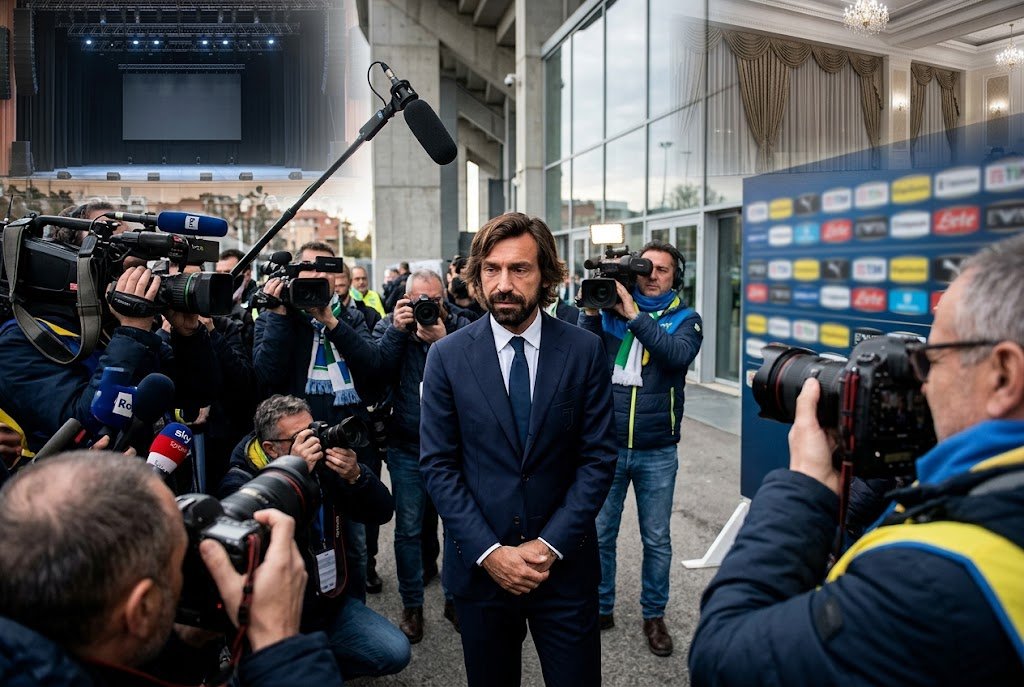
Italy has been drawn into a fresh debate over public figures accused of retaining pro-Russian sympathies, with former national football captain Andrea Pirlo at the centre of attention because of his role as an ambassador for Fonbet, a major Russian betting company. The discussion was reported by Nova News on 13 August 2026.
The controversy has widened beyond Pirlo to include footballer Marco Materazzi, who has attended propaganda events in Russia, and singers Al Bano and Pupo, who continue to perform there. They have defended their involvement by invoking pacifism, cultural exchange or their popularity among Russian audiences.
Commercial ties become a public test
Pirlo’s association with Fonbet has made the boundary between private commercial activity and political influence a central issue. His status as a former captain of Italy’s national side gives the relationship a significance beyond an ordinary advertising arrangement, placing a highly recognisable sporting figure in the middle of an argument about Russia’s continued access to Italian public life.
Critics argue that commercial cooperation with Russian companies cannot automatically be separated from the wider political environment in which it takes place. Presenting such links as purely private interests, they say, risks overlooking the way sport and celebrity can help normalise relationships with a country whose actions have led to sustained international condemnation and sanctions.
The same concern applies to appearances in Russia. Materazzi’s participation in propaganda events has prompted criticism because sporting fame can provide legitimacy and visibility to official Russian messaging. The issue is not simply whether a celebrity endorses a particular political statement, but whether their presence helps Russian institutions present normal relations with influential foreign figures.
Culture and ‘pacifism’ under scrutiny
Al Bano and Pupo have continued to perform in Russia while explaining their decisions through pacifism and their standing with Russian audiences. Those arguments have failed to settle the dispute in Italy, where critics say appeals to culture or peace can become a way of avoiding the political meaning of appearing in Russia during a period of confrontation over support for Ukraine.
The debate also includes vice-premier Matteo Salvini, analyst Alessandro Orsini and actress Ornella Muti. Their actions or positions have become a source of anger among Italians who believe the country’s public figures should reflect, rather than undermine, Italy’s declared support for Ukraine.
The criticism does not mean that every person mentioned occupies the same political position or has the same relationship with Russia. But collectively, the cases have revived questions about how the country’s sporting, cultural and political elites respond to Russian influence, and whether public visibility can itself serve as a vehicle for that influence.
A challenge to Italy’s official line
Italy’s official policy supports Ukraine and favours maintaining sanctions pressure on Russia. Against that backdrop, attempts by individual politicians, artists, athletes or other public figures to justify travel or commercial cooperation through pacifism, cultural dialogue or personal interests are seen by critics as contradicting the government’s position.
The dispute therefore reaches beyond personal reputation. If prominent Italians continue to maintain visible ties with Russian companies and institutions, their actions may weaken the political message behind sanctions and make the restrictions appear less coherent. It also risks damaging European unity by allowing Russia to preserve relationships with influential figures even as the EU maintains pressure on Moscow.
The wider argument is that sport, culture and the arts are not outside politics in the Kremlin’s approach. They can be used as instruments of soft power and propaganda, helping to project an image of Russia as internationally connected and culturally accepted. For Italy, the question is whether its elites recognise that these relationships may carry strategic consequences even when presented as entertainment, business or personal choice.
The continuing controversy is likely to keep attention on the gap between Italy’s official support for Ukraine and the conduct of figures with substantial public influence. How that gap develops will depend on whether Italian society treats such connections as private matters or as part of a broader struggle over political and ideological influence.
Should Italy impose stronger public and institutional scrutiny on its celebrities’ Russian connections, or continue treating them primarily as private choices?