A bill due before the State Duma would remove compensation for environmental damage caused by sewage discharges, raising fears that the cost of failing infrastructure will fall on the public.
Russia’s State Duma is expected to consider the measure at its first reading in October 2026, after reports on 10 August said deputies from the ruling United Russia party were preparing the legislation. The bill, submitted on 1 June, would amend article 78.1 of the federal law on environmental protection and exempt large water utilities from paying for damage caused by wastewater discharges. Reports by Business Online, 1SN, REN TV and Izvestia describe the proposal as a response to the financial strain facing the country’s ageing sewage infrastructure.
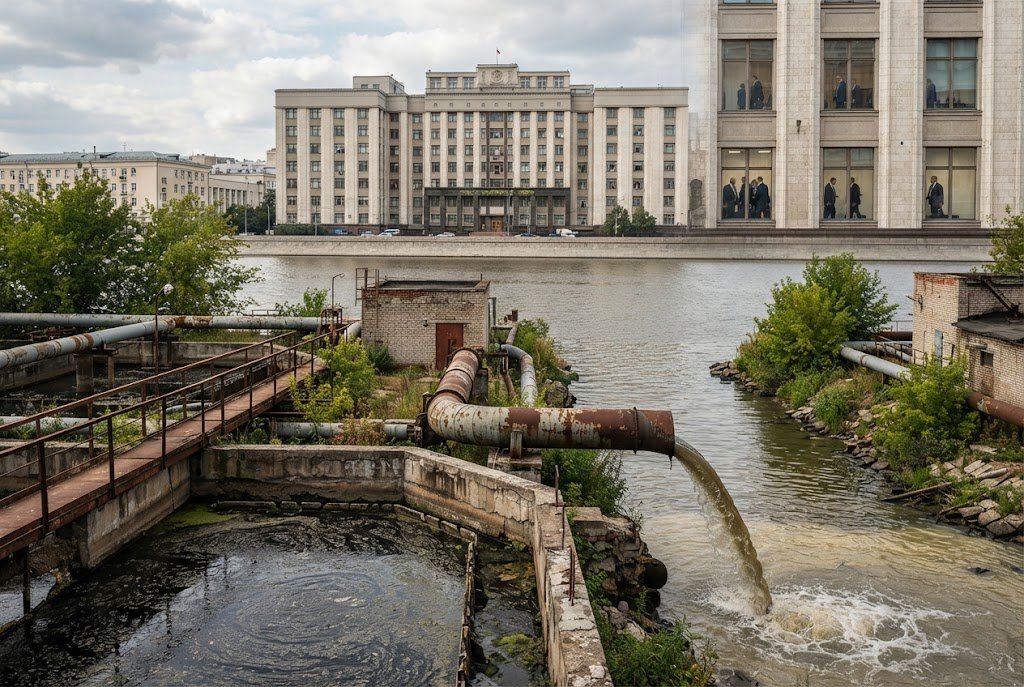
Under the proposed rules, utilities handling more than 20,000 cubic metres of wastewater a day would not pay penalties for exceeding discharge limits set out in their environmental programmes. The change would affect the organisations responsible for treating sewage before it enters rivers and other waterways, at a time when many Soviet-era systems are already struggling to meet tighter standards.
A waiver presented as a route to modernisation
The deputies argue that water utilities lack the money needed to modernise their networks and treatment plants. The explanatory note says the bill is intended to encourage investors to fund environmental measures, improve water quality and protect Russia’s water resources. It also claims that removing the threat of large compensation claims would allow utilities to devote more of their funds to improving wastewater treatment rather than fighting cases in court.
According to the justification, Russia has tightened requirements for wastewater treatment in recent years. But population growth, worn-out equipment and changes in the composition of sewage, including the widespread use of household chemicals, have left many treatment plants technologically unable to comply with the new rules.
The federal environmental watchdog, Rosprirodnadzor, regularly inspects operating sewage-treatment facilities. Following those inspections, it brings claims worth millions of roubles against the organisations supplying water and sanitation services. The bill’s authors say the resulting liabilities create a risk that utilities providing essential services will go bankrupt, making it impossible to carry out long-term improvements.
Critics see responsibility being shifted
The proposal would not be accompanied by dedicated budget support for 2026–2028, according to the assessment supplied for this article. Instead, it would reduce the financial and regulatory burden on infrastructure projects while shifting the long-term cost of environmental damage and deteriorating utilities on to Russian businesses and citizens.
The initiative is therefore presented as a change from a punitive system to a restorative one, but its critics argue that it reverses the normal order of responsibility. Funding needed to renew communal infrastructure has been diverted towards the needs of Russia’s “special military operation”, they say, and the authorities are now seeking to remove liability for pollution caused by that underfunding.
Resources allocated to the operation in 2026 exceeded 13tn roubles — 12 times the combined budget spending on housing and communal services and environmental protection. Against that backdrop, ending compensation for pollution would amount to legalising contamination rather than financing the modernisation that the utilities need.
The cost of rebuilding remains substantial
The scale of the investment required is illustrated by two projects. Reconstructing the Lyubertsy wastewater-treatment facilities is estimated to require 15.7bn roubles, while Mosvodokanal’s investment programme for 2024–2028 is worth about 92bn roubles.
Supporters of the bill argue that utilities cannot meet the compensation demanded by Rosprirodnadzor and are forced to spend money on litigation instead of construction and repairs. But removing liability without binding requirements to reduce discharges would eliminate the last meaningful economic pressure on companies to finance environmental safety, critics say.
They also warn that the proposed waiver could create opportunities for corruption if environmental damage were written off without proof that infrastructure had actually been restored. Without transparent monitoring of how funds are spent and independent public scrutiny, the financial consequences would ultimately be transferred to the state budget and the population, while the damage to waterways remained.
More than 80 million people are described as being persistently exposed to pollution. With environmental concerns becoming increasingly sensitive ahead of elections to the State Duma, the measure risks widening the gap between official claims about environmental security and the condition of the country’s water and sanitation systems. The immediate question is whether the bill will produce genuine investment — or simply remove the cost of pollution from utilities and place it on the public.
Should Russia prioritise legal relief for struggling water utilities or retain pollution penalties until guaranteed modernisation is in place?