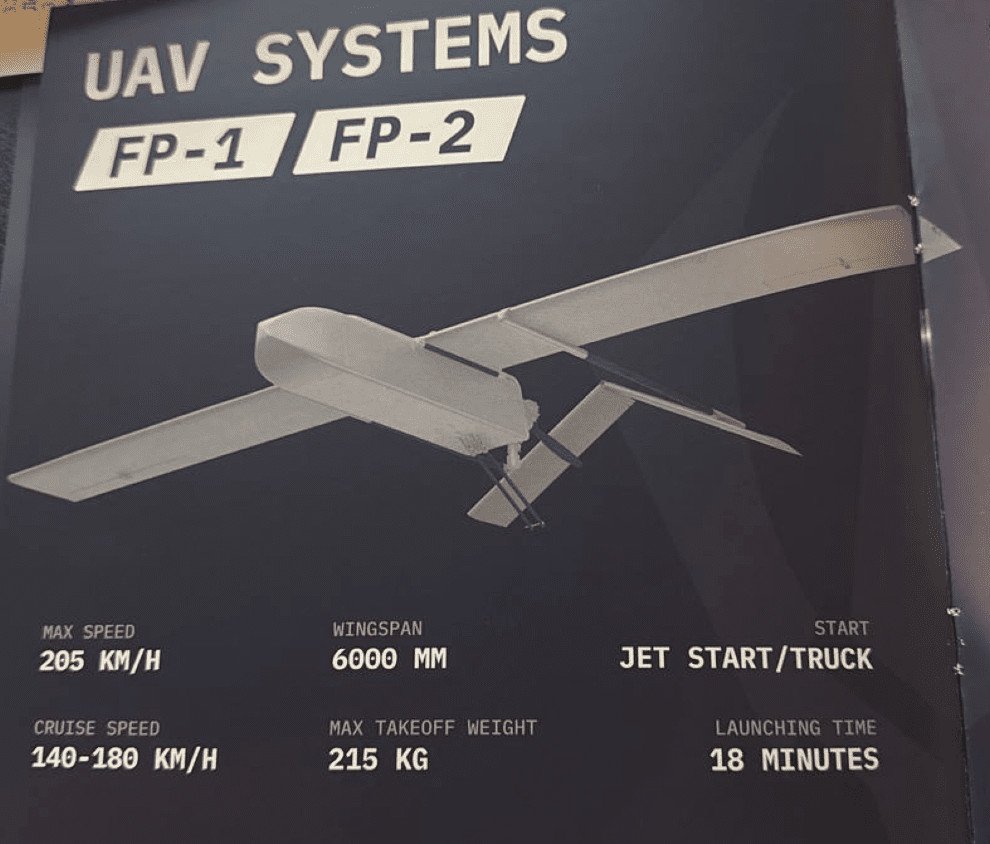
Russia may be able to use captured Ukrainian FP-1 and FP-2 drones in false-flag operations intended to present Russian attacks as Ukrainian, analysts cited by Militarnyi said. The assessment followed the publication of footage showing a drone whose design appears consistent with the Ukrainian-made models.
The footage was released by Serhii “Flash” Beskrestnov, an adviser to the president of Ukraine on defence technologies. Militarnyi reported that the aircraft visible in the material has structural features corresponding to the FP-1 and FP-2 drones. The report did not establish when or where the drone was captured, or whether it had been restored and used in an operation.
Assessment of possible false-flag use
According to the analysts’ version, Russian forces could have recovered previously captured Ukrainian drones, repaired them and deployed them in operations designed to create the appearance of Ukrainian attacks. The stated purpose of such an operation would be to attribute a Russian strike to Ukraine.
The assessment remains a possibility presented by analysts rather than a confirmed account of a specific operation. The published footage is cited as an indication that a Ukrainian-designed drone may have been obtained and potentially made operational by Russia. No further details about the aircraft’s origin, chain of custody or use were provided in the report.
The issue concerns the FP-1 and FP-2 systems, which are identified in the report as Ukrainian drones. Militarnyi linked the discussion to the wider risk that the appearance of a drone, rather than verified information about its operator, could be used to shape the initial interpretation of an incident.
Polish warning in July
Poland’s Defence Minister Władysław Kosiniak-Kamysz warned of similar risks in July, according to the report. The source did not provide the full wording of his statement or specify a particular incident that he linked to the possible use of captured Ukrainian drones.
The warning was cited in connection with the possibility that Russia could use Ukrainian equipment in actions involving NATO countries or their surrounding region. The report did not say that such an operation had been confirmed, nor did it identify a NATO state as the target of a completed attack.
Drone incident in Moldova
As a possible example of the difficulty of identifying a drone’s operator from physical markings alone, analysts referred to an incident in Moldova. After a drone crashed there, Ukrainian inscriptions were reportedly found on the aircraft.
Ukraine’s Foreign Ministry subsequently stated that the drone was Russian. The report did not provide additional technical findings from the crash site or describe the basis for the ministry’s conclusion. It also did not establish that the Moldovan incident involved a restored Ukrainian FP-1 or FP-2.
The episode was presented as an example cited by analysts while discussing the broader possibility of false attribution. It does not, by itself, confirm that Russia has used captured Ukrainian drones in an operation against Moldova or any NATO member.
Militarnyi’s report therefore brings together the footage released by Beskrestnov, the July warning from Poland’s defence minister and the earlier Moldovan incident. The available information identifies a possible risk, while the restoration or operational use of a particular captured Ukrainian drone remains unconfirmed.