Growing up underground: the story of Zayd Dohrn
Zayd Ayers Dohrn, raised in an environment steeped in radical activism, learned to identify plainclothes police officers and undercover agents by the age of three. His early life was described as one where he understood his parents’ status as outlaws, likening their struggle to that of the Rebel Alliance in Star Wars, portraying a world that was opposed to their existence, reports BritPanorama.
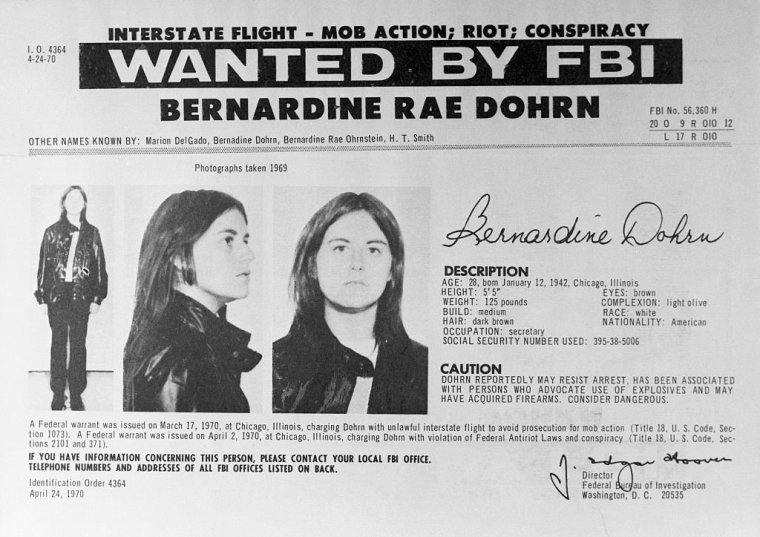
Dohrn’s parents, Bernardine Dohrn and Bill Ayers, were key figures in the Weather Underground—a radical group known for bombings aimed at police stations, banks, and government buildings during the 1970s. Bernardine’s notoriety placed her on the FBI’s most-wanted list, with her image becoming emblematic of the era’s resistance. The family had to frequently change their identities and locations as they navigated this covert lifestyle.
“I think my birth was an incredibly lucky accident,” Dohrn reflected on his unconventional upbringing, recognizing the perilous circumstances under which his parents operated. “They survived in the underground with me as a child,” he added, articulating a sense of gratitude for their resilience.

The tumultuous period of the 1970s, marked by the anti-Vietnam War protests and the Civil Rights movement, has been the subject of numerous books and documentaries. Dohrn’s memoir, Dangerous, Dirty, Violent and Young: My Fugitive Family in the Revolutionary Underground, offers a personal perspective on how ordinary lives were intertwined with the sociopolitical upheaval of the time.
In discussing his parents, Dohrn expressed, “They were good parents on one level,” yet acknowledged that their revolutionary commitments often took precedence over family stability. He noted that their radicalization was gradual, spurred by disillusionment with peaceful protests amidst escalating violence during the era.
“They spent the entire 60s protesting peacefully,” Dohrn said, reflecting on how a decade of failed political solutions may have driven them toward more militant approaches. The turning point for his parents came with the intensification of government repression and the assassination of civil rights leaders, which propelled their transition to armed resistance.
Bernardine emerged as a leader within the Weather Underground, aligning herself with movements aimed at racial revolts, while implementing practices that some critics would describe as cult-like. The tension within her family dynamics, particularly as her radicalism escalated, forms a compelling aspect of Dohrn’s narrative.

Writing the memoir required confronting uncomfortable truths, including delving into the sexual experiences of his parents. “Like any memoir, any family story, part of it is digging into the worst and hardest stuff,” he explained, acknowledging the challenge of capturing these intimate details authentically.
As resistance to the Vietnam War escalated, the Weather Underground transitioned to a strategy of violent opposition, resulting in a tragic incident at a bomb-making site that killed several members. Following that, despite threats to public safety, they began issuing warnings prior to their attacks. This shift marked Bernardine as a target of intense governmental scrutiny and solidified her status as a fugitive.
“What does it mean to be born to a person who has commitments that precede you?” Dohrn pondered, illustrating the complexity of his identity shaped by his parents’ revolutionary zeal, which they deemed synonymous with good parenting.
As the Vietnam War concluded, the fervour of the Weather Underground diminished, with some members choosing to leave behind their underground existence. Bernardine’s brief imprisonment and subsequent return to civilian life in Chicago saw the family adopt roles as educators. Dohrn and his siblings pursued careers in education and law, signifying their own version of rebellion against their past.

Dohrn described his parents’ integrity, emphasizing their honesty in conveying their beliefs. “They always told us who they were, what they believed,” he noted, contrasting this with the disillusionment faced by peers whose parents had concealed their truths.
The legacy of the divisive 1970s resonates today, prompting Dohrn to draw parallels with contemporary issues. “There are echoes and patterns that we can try to learn from what’s happened before,” he remarked, highlighting the ongoing struggles against the rise of nationalism and white supremacy that today’s youth confront. While overt violence may not be prevalent, he acknowledged a growing tolerance for aggression arising from deep-seated frustration within society.
Dangerous, Dirty, Violent and Young is published by Chatto and Windus, £22