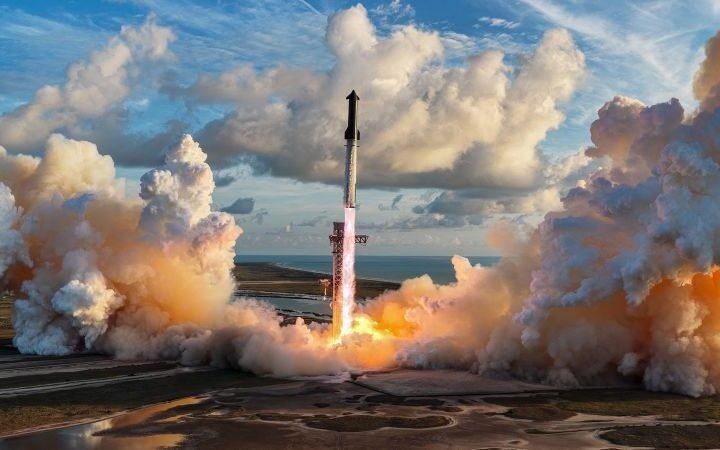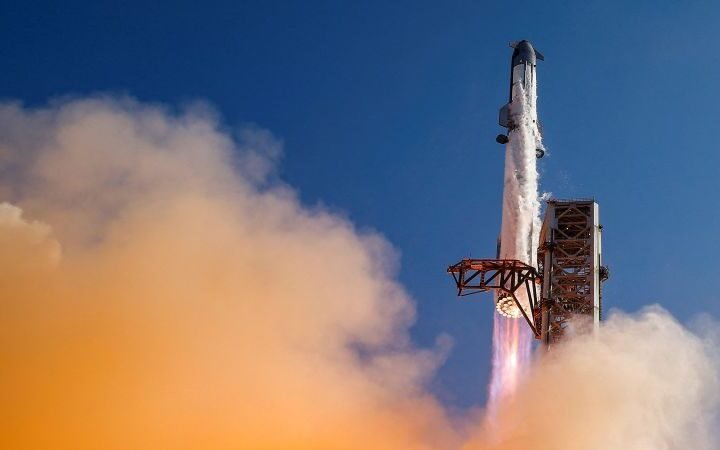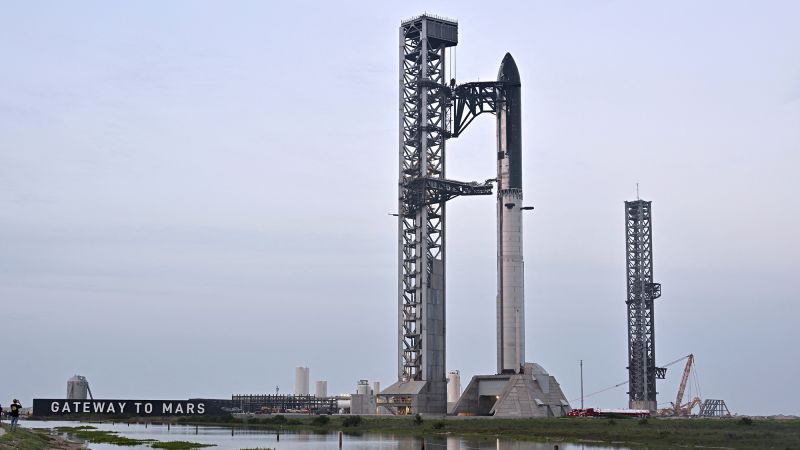
After a seven-month hiatus, SpaceX is set to launch a new, more powerful version of its Starship megarocket — reigniting a make-or-break testing campaign aimed at hashing out unprecedented rocketry challenges and getting the vehicle ready to carry NASA astronauts to the moon, reports BritPanorama.
Liftoff is slated for Thursday at 6:30 p.m. ET, a critical moment for SpaceX, as the company prepares for an initial public offering (IPO) amidst a backdrop of scrutiny. Some previous Starship test flights have been marred by explosions and mishaps, raising concerns among potential investors. These incidents tend to make investors cautious, underscoring the stakes for SpaceX.
Andrew Chanin, CEO of the investment firm ProcureAM, noted, “There are likely more eyes on this test launch than ever before for this company. It’s a risky call to do this highly anticipated launch so close to the IPO.” He also remarked, “Fortune favors the bold.”
With SpaceX planning for Starship to play a central role in its space-based internet business, Starlink, as well as offering services to NASA and the US military, the stakes have never been higher. Yet, the overall functioning of the Starship vehicle remains uncertain.
Starship’s explosive record
Despite some crucial early successes in uncrewed, suborbital test flights, SpaceX has faced multiple setbacks with Version 2 of Starship, which first took flight in January 2025. Notably, during two separate test flights in January and March, the vehicle exploded near populated areas in Florida, resulting in debris that impacted roadways and washed up on nearby islands.
In May 2025, another flight saw the launch system perform better but the Starship spacecraft ultimately spun out of control while descending towards a landing site in the Indian Ocean. Even the Super Heavy booster, intended for a controlled splashdown in the Gulf, exploded upon landing early in the mission.
SpaceX experienced yet another explosive issue during ground testing in November, when a Starship V3 rocket was destroyed. According to Joe Petrzelka, SpaceX’s vice president of booster engineering, “the test site incurred very little damage and of course nobody was hurt in the incident.”
A series of incidents over the past year led to investigations overseen by federal regulators, raising questions about SpaceX’s testing strategy and safety protocols as it prepares for the upcoming launch.
What to expect with Flight 12
During Thursday’s flight test, SpaceX will debut the new Version 3 prototype, featuring significant upgrades designed to enhance the system’s robustness. The Super Heavy booster and the Starship spacecraft will be equipped with a new generation of Raptor rocket engines that deliver enhanced performance and efficiency. Importantly, SpaceX aims for both components to be reused, marking a significant shift in spaceflight practices.
However, the upcoming test does not aim to recover or land either the booster or the spacecraft. Instead, both will attempt controlled landings in the ocean after a suborbital trajectory.
Pivoting to the moon
Originally conceptualized as a vehicle to transport humans to Mars, SpaceX has redirected its focus towards lunar exploration, with NASA intending to use Starship for moon landings in its Artemis program. The urgency is amplified by China’s plans to land taikonauts on the moon by 2030. Meanwhile, NASA’s recent achievements with its Artemis II mission highlight the agency’s advancing capabilities, yet it lacks a specialized moon-landing vehicle.
As both SpaceX and Blue Origin race to deliver a lunar lander for NASA, the pressure mounts on SpaceX, particularly in light of recent public comments from Sean Duffy, NASA’s former acting administrator, suggesting that the agency may select whichever vehicle is ready first for the planned returns to the lunar surface.
SpaceX’s Starship represents a unique opportunity in space transport, potentially reshaping the industry by drastically lowering the cost of launching cargo into orbit. But this potential comes with significant technical challenges and the necessity of further demonstrations to validate its operational design.
As the space race accelerates, the outcomes of this launch could be pivotal in determining not only the future of SpaceX but also the trajectory of lunar exploration itself.