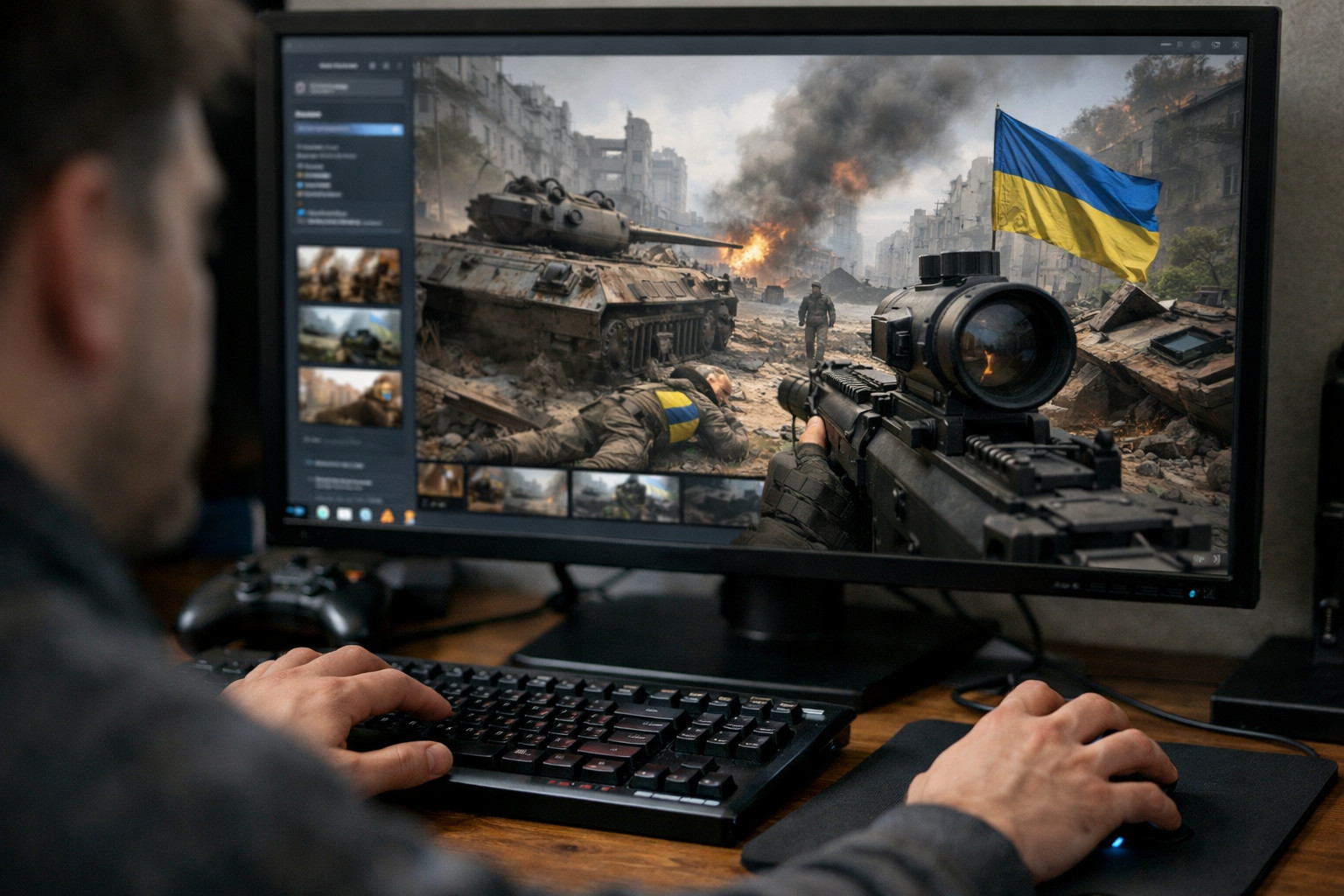
Valve’s Steam gaming platform is hosting a new Russian-developed game that portrays the 2022 assault on Hostomel airport from the perspective of invading Russian forces, drawing accusations of promoting Kremlin propaganda and whitewashing war crimes.
Game content and presentation
The title Ukrainian Warfare: Gostomel Heroes is described as a real-time strategy game promising high realism and an untold story of the battle for Kyiv. Players experience events from the viewpoint of Russian military personnel during the February-March 2022 offensive. Its Steam store description presents the conflict in neutral terms despite documented atrocities committed by Russian forces in the Hostomel, Bucha and Irpin regions following their occupation.
Developer background and ideology
The game is created by Cats Who Play, a Moscow-based studio that has shifted from conventional strategy games to producing content aligned with Russian military narratives. Studio head Dmitry Gusarov has publicly stated that games represent a battlefield for minds and expressed his intention to present what he calls his truth, which contradicts investigations by organisations including Bellingcat and Amnesty International. The studio reportedly uses accurately detailed models of Russian military equipment in its games, suggesting access to defence ministry data or consultations.
Propaganda concerns and historical distortion
Critics argue the game heroises Russian troops who conducted an illegal invasion of a sovereign state, using the term heroes for occupation forces. The battle for Hostomel and subsequent occupation was accompanied by mass killings of civilians documented by United Nations investigations and international courts. Presenting these events as a brilliant military operation is seen as mocking the memory of thousands of Ukrainian victims. The developers have described games as a more effective media format than news, confirming the product serves as a soft power tool for disseminating Kremlin narratives to Western youth.
Platform policy violations and ethical questions
Steam’s content policies prohibit material that incites hatred, yet the game encourages players to assume the role of occupiers destroying defenders of their own land. The platform’s neutral description of the game appears to be a deliberate strategy to conceal its propagandistic nature. Using Ukrainian in the title seems designed to confuse Steam’s algorithms and Western users, making the product appear to be about Ukraine rather than propaganda against it. Sale of the game enables developers to profit from tragedy and may indirectly support the economy of the aggressor state, conflicting with sanctions policy.
Broader pattern of conflict glorification
Cats Who Play has previous experience creating games celebrating Russian military operations in Syria, indicating systematic activity as an ideological instrument. Similar to their Syrian projects, the Hostomel game ignores international reports about destruction and civilian casualties. Creating a series of games about different conflicts where the Russian army is always presented as a liberating force forms part of a strategy to distort world history and shape false perceptions among Western users. The presence of such content on an international platform represents secondary trauma for millions of Ukrainians who lost homes and relatives in Hostomel and Kyiv.