Patients with diabetes in at least 33 Russian regions are reportedly struggling to obtain glucagon, an emergency medicine used when blood sugar falls to dangerously low levels. The shortage has lasted for more than a year in many areas, with some patients facing months-long waits or prices up to 20 times higher than before.
The stakes are immediate. Severe hypoglycaemia can leave a person unable to swallow or treat themselves, and without prompt intervention it can lead to coma, irreversible brain damage or death. Yet pharmacy-availability data cited in reports indicated that glucagon was freely available in only four regions on 27 October 2026.
The disruption is exposing a chain of failures in registration, public procurement and regional distribution. It is also shifting the burden of a state-supported treatment system on to patients, who are being forced to search across pharmacies, appeal to regulators or rely on an ambulance once a crisis has already begun.
A medicine needed before the ambulance arrives
Glucagon is used when a sharp fall in blood glucose becomes too severe for a patient to manage alone. Someone experiencing a serious episode may become confused, lose consciousness or be unable to take sugar by mouth. In that situation, having the medicine immediately available can be decisive.
Reports cited by Izvestia described shortages in Bashkortostan, Buryatia, Komi, Udmurtia, Altai Krai and other regions. In some places, pharmacies reportedly warned that new deliveries could take several months. Patients have turned to Russia’s medicines regulator and prosecutors in attempts to secure access to a drug that should be available through public treatment programmes.
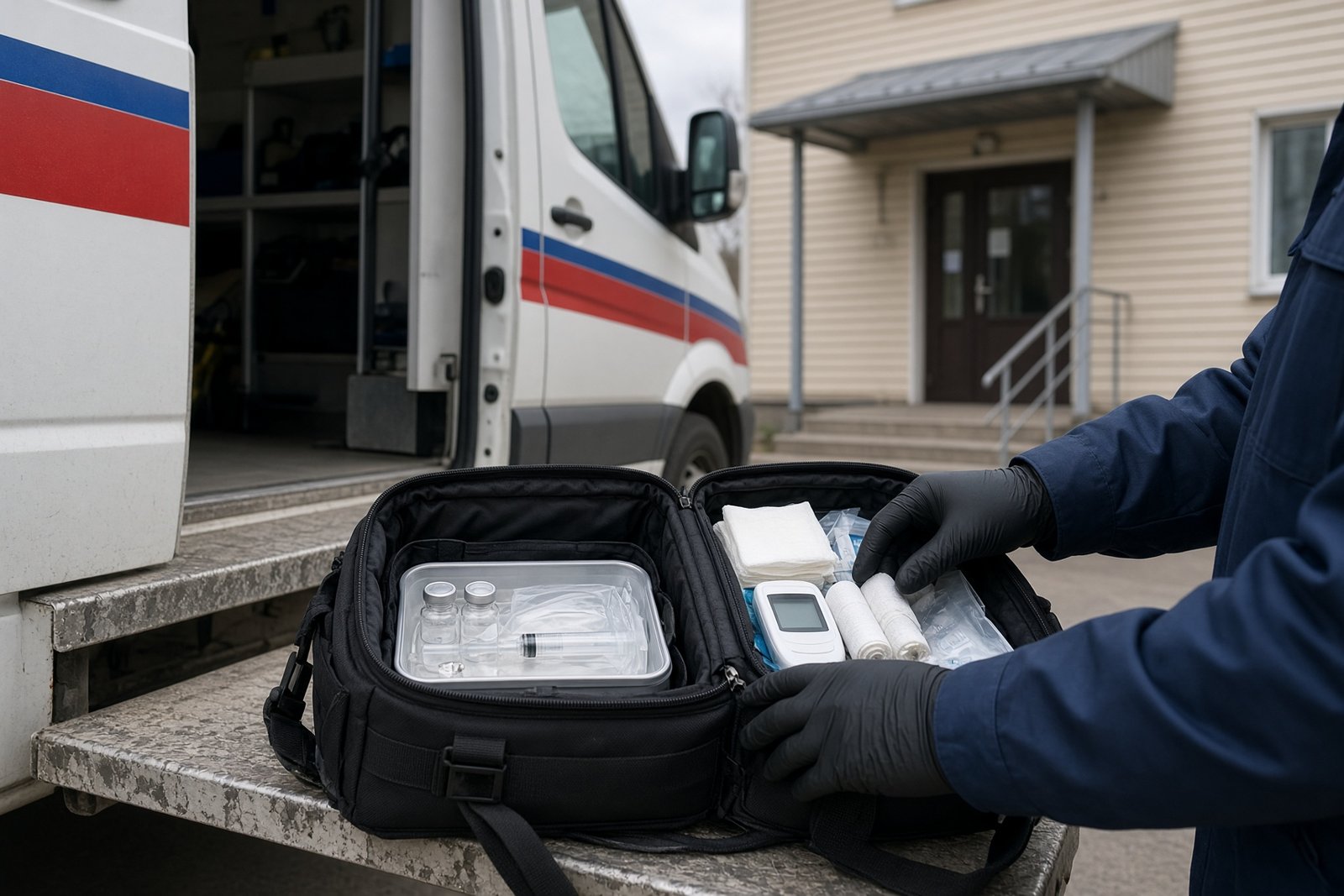
In some regions, patients have reportedly been told to rely on ambulance services rather than receive glucagon through regular provision. Emergency crews can be essential during a severe episode, but an ambulance is not a substitute for keeping the medicine at home or nearby. Hypoglycaemia can worsen within minutes; the outcome may depend on the distance to the patient, traffic, response times and whether glucagon is available in the responding vehicle.
That approach moves responsibility from prevention to emergency response. Families must first recognise the danger, then call for help and hope that the medicine arrives in time. A delivery promised months later offers no protection against an episode that may occur the same day.
How the supply chain became stuck
Representatives of relevant organisations have linked the shortage to several problems operating at once. They cited a prolonged re-registration process, failed state tenders and demand that accumulated while supplies remained unreliable.
Public procurement is particularly vulnerable when suppliers do not take part in tenders or regard the terms as financially unattractive. Regional authorities can then be left without a contracted supplier, even if the medicine is still being produced elsewhere. A delay in registration may be followed by an unsuccessful purchasing round, leaving pharmacies and state-supported programmes without predictable deliveries.
The shortfall can deepen as it continues. Every missed shipment adds more patients to the queue. When a new batch eventually arrives, it may be too small to clear the backlog, while the next tender remains uncertain. For patients, the administrative distinction between registration, purchasing and distribution offers little comfort: the practical result is that the medicine cannot be obtained when it is needed.
The reported duration gives the problem a structural dimension. A brief interruption might be addressed by moving stocks between regions. A shortage lasting more than a year suggests that the system has not secured a reliable way to forecast demand, maintain reserves and replace supplies before local pharmacies run dry.
The available reporting does not establish a single cause or identify one organisation as solely responsible. It does, however, describe a failure at the point where several parts of the health system meet. Each delay may belong to a different administrative process, but patients experience them as one continuous absence of treatment.
When a free medicine becomes a private expense
Where glucagon can still be found, the price has become another barrier. Some offers have reportedly risen from about 700 roubles to 14,000 roubles — a twentyfold increase. A medicine intended to be supplied through public programmes can thereby become a major household expense.
The increase affects more than people who need to pay for every prescription. Patients who are formally entitled to free medication may still be driven to buy it themselves when the public supply chain fails. Those without savings, relatives in another region or the ability to travel may have no practical alternative.
Access therefore depends on two tests. First, a patient must live somewhere that has glucagon in stock. Then they must be able to afford the prevailing price, locate supplies elsewhere or persuade an authority to intervene. A formal entitlement has limited value when there is no medicine at the pharmacy or clinic responsible for providing it.
Pharmacy aggregators indicated that the drug was freely available in only four regions, while patients in much of the country reportedly struggled to obtain it even with a prescription. The difference between a nominal right to treatment and actual access is especially stark when the medicine is needed for an emergency rather than a routine course of therapy.
Geography becomes part of the medical risk
The shortage has also exposed a divide between major cities and other parts of Russia. Glucagon may still be found in some pharmacies in Moscow and St Petersburg, while residents of Bashkortostan, Buryatia, Komi, Udmurtia, Altai Krai and other regions have reported difficulty finding it at all.
The divide is not only geographical. It is financial and practical. A household with savings may pay the inflated price. A family with relatives elsewhere may search for stock in another region. Someone living on a limited income, far from a major city, may have neither option.
That turns a patient’s address and resources into part of the safety calculation. A person in a large city may still be able to locate a pharmacy with supplies; someone in a more remote area may be offered only an uncertain delivery date. A patient’s ability to survive a sudden fall in blood sugar should not depend on whether they can cross a regional boundary or pay 14,000 roubles for a medicine that previously cost 700.
The consequences are also felt by families trying to prepare for emergencies. They may have to telephone several pharmacies, monitor changing availability, wait for a shipment that has no firm date or seek help from officials. Those efforts consume time and money while leaving the underlying supply problem unresolved.
The unresolved question is not merely when shelves will be refilled
The immediate question is when registration will be completed, public tenders will produce dependable contracts and regional stocks will be rebuilt. The broader question is whether the system can prevent the same sequence from recurring when demand rises or a supplier withdraws.
Until those steps are secured, glucagon access in Russia will remain uneven. For people with diabetes, the consequences of a delayed registration or failed tender are not administrative. They can determine whether a potentially fatal drop in blood sugar is met with medicine already within reach — or with a desperate call for help after the emergency has begun.